

Protein, Plants, and the Nutrition Noise Problem
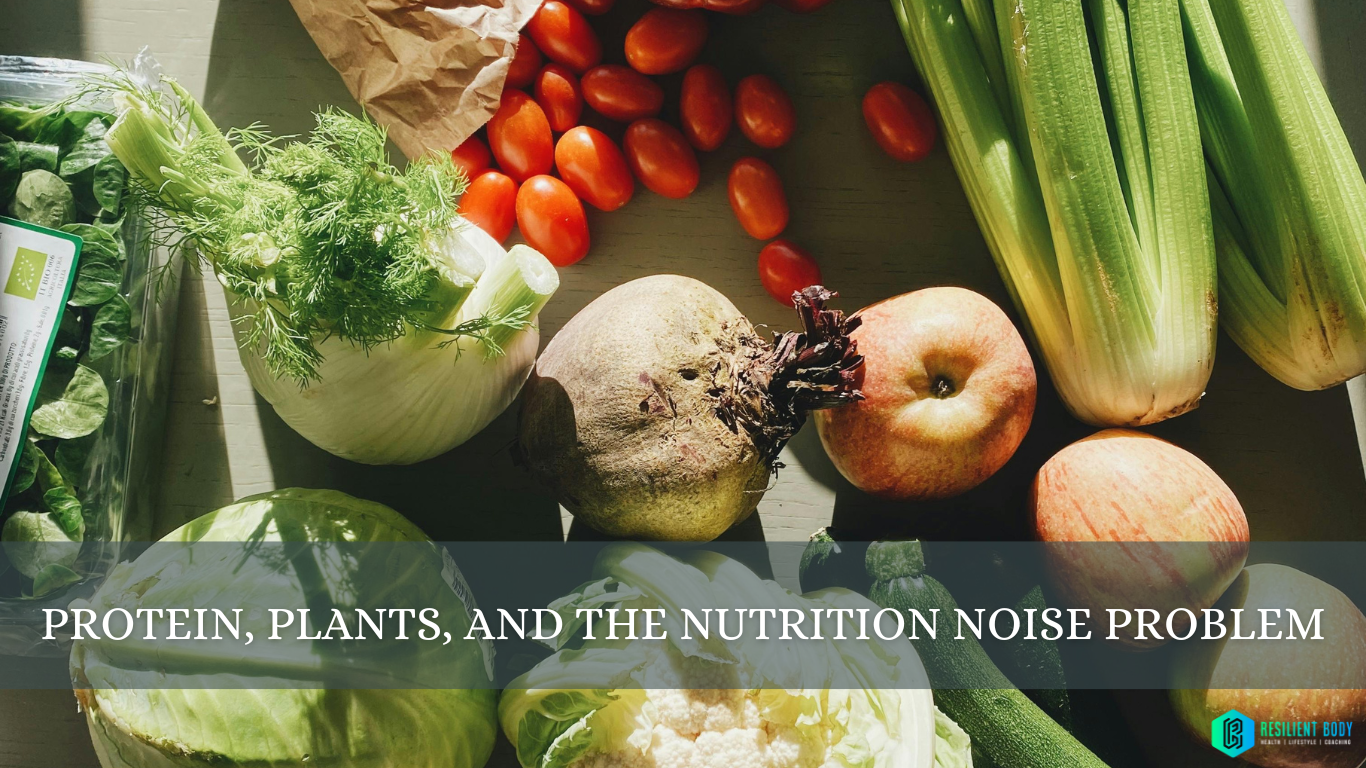
Most people need less extremism, more consistency, and a wider view of what actually drives health
There’s a weird thing happening in nutrition right now though it’s been building for a long while now.
On one side, protein has become almost meme-level overhyped in certain spheres.
On the other, there are still people unintentionally under-eating it enough that they struggle with satiety, recovery, muscle retention, performance, and healthy aging.
At the same time, one of the most consistently supported longevity and health variables in nutrition - adequate fiber and plant intake - continues to get largely ignored because it’s far less sexy.
Nobody is posting viral videos about lentils.
And yet, when you zoom out from internet and social media nutrition culture, and actually look at the larger body of evidence, the answer for most people is usually less extreme:
eat enough quality protein sources to support health, recovery, strength, and lean mass
eat a wide variety of minimally processed plant foods
stop oscillating between perfection and chaos
build something sustainable enough to actually continue since that matters more than almost anything
That’s a lot less marketable than “THIS FOOD IS KILLING YOU,” but it’s probably far more useful.

Protein: Important? Absolutely.
Magic? Not Exactly.
Protein matters.
A lot.
Especially for:
preserving muscle as we age
recovery from training
satiety and appetite regulation
bone health
metabolic health
maintaining strength and function long term
supporting healthy aging and independence later in life
This is one of the reasons we emphasize protein so heavily in our nutrition coaching.
But internet nutrition has a habit of taking good ideas and turning them into identity politics.
Now we have people convinced they need 280 grams of protein daily despite training recreationally three days per week and sitting at a desk the rest of the day.
The reality is more nuanced.
Historically, the RDA for protein sat around ~0.8 g/kg/day.
But it’s important to understand what the RDA actually represented.
It was largely designed as a minimum intake to prevent deficiency — not necessarily the amount thought to optimize recovery, body composition, muscle retention, satiety, performance, or healthy aging.
More recent 2025–2030 dietary guidance and aging-focused recommendations have increasingly shifted toward somewhat higher protein recommendations for many adults, particularly:
active individuals
aging populations
people resistance training
those trying to preserve lean mass during fat loss
individuals recovering from illness, injury, or inactivity
For general health and healthy aging, many experts now commonly land somewhere around:
~1.0–1.2 g/kg/day as a more reasonable floor for many active adults
~1.2–1.6 g/kg/day as a very solid target range for many people focused on health, satiety, performance, and longevity
The National Council on Aging and other aging-focused organizations have increasingly highlighted that older adults likely benefit from higher protein intakes due to anabolic resistance — meaning the body becomes less efficient at building and maintaining muscle tissue with age.
And muscle is not just cosmetic.
Muscle is strongly associated with:
balance
fall risk
metabolic health
resilience to illness
independence later in life
overall quality of life
At the same time, social media and bodybuilding culture often take this conversation and push it to the opposite extreme.
One of the most referenced pieces of literature here is the Morton meta-analysis, which pooled data across resistance training studies and found muscle growth benefits appeared to plateau around:
~1.6 g/kg/day for most people
with potential benefit up to ~2.2 g/kg/day in some cases
This is your bodyweight in kilograms by the way.
That’s still plenty of protein.
But importantly, this research was largely looking at maximizing muscle growth outcomes in resistance-trained individuals; and not necessarily defining what every general population adult needs for baseline health.
And even within physique and strength circles, the findings suggested diminishing returns beyond a certain point.
In other words:
More is not always meaningfully better.
For someone weighing:
150 lbs → ~110–150g/day is often plenty
180 lbs → ~130–180g/day
220 lbs → ~160–220g/day
And honestly, many people would likely see meaningful benefits simply going from chronically low intake to a more moderate, consistent intake.
Context matters too:
training volume
age
calorie deficit vs maintenance
body composition goals
activity level
recovery demands
food preferences and sustainability
Protein quality matters some too.
Leaner animal proteins, dairy, legumes, soy, seafood, eggs, and mixed plant sources can all absolutely play a role.
And despite how nutrition debates often get framed online, this does not need to become a war between protein and plants.
Those things coexist extremely well.
The point is not that protein is overrated.
It’s that nutrition culture often struggles with moderation and context.
The Other Side of the Equation Nobody Talks About
Enough Fiber and Plant Intake
While protein has become the star of modern nutrition culture, fiber is still sitting quietly in the corner doing some of the most important heavy lifting for long-term health.
Fiber intake is associated with:
improved gut health
reduced cardiovascular disease risk
improved blood sugar regulation
improved satiety
healthier cholesterol markers
improved digestive regularity
lower all-cause mortality
healthier microbiome diversity
And yet most adults still don’t consume enough.
General recommendations still typically land around:
~25g/day for women
~38g/day for men
Many people aren’t even close.
And no - this is not just about digestion.
Plant foods provide:
fiber
polyphenols
micronutrients
antioxidants
compounds that support gut bacteria and downstream metabolic health
This is where nutrition conversations often become unnecessarily tribal.
You do not have to choose between:
eating enough protein
and eating plants
Those things coexist extremely well.
In fact, most high-performing long-term nutrition approaches include both.
The Goal Was Never To Win Nutrition Internet
One of the biggest problems with modern nutrition culture is that people increasingly eat according to ideology instead of practicality.
Carnivore.
Vegan.
Keto.
Fasting.
Biohacking.
Detoxes.
Seed oil wars.
Meanwhile, many people still:
sleep poorly
under-eat protein
barely eat produce
swing between restriction and overeating
eat too fast
rarely cook
have almost no consistency
The basics still matter. A lot.
And boring consistency still beats dramatic intensity most of the time.
What We Actually Encourage
At Resilient Body, we generally (and gently) push people toward:
adequate protein intake for their needs
more minimally processed foods if the processing doesn’t help you or the food
more fruits and vegetables
more fiber
better meal structure
slowing meals down occasionally
better awareness around hunger/fullness
sustainability over perfection
enough flexibility that life can still feel normal
That’s not flashy.
But it works.
And importantly - it tends to support both:
performance and body composition goals
long-term health and longevity
without requiring people to turn eating into a second full-time job.
Final Thought
Most people probably don’t need:
more nutrition fear
more absolutism
more food anxiety
more dietary tribalism
They probably need:
enough protein
more plants
more consistency
less chaos
better habits
and a strategy they can actually sustain
Health is rarely built through nutritional extremes.
It’s usually built through boring things done consistently for a very long time.
And honestly?
That’s probably a good thing.

📣 Quick Announcements:
New classes and a brand new block of training are now in full swing into week 2
We’ve made some recent adjustments so they are even better! Ask your coach about membership options if you want to lock in a more consistent routine and save on classes.Bring a friend and you are both free on either class Saturday morning!
Our 8-Week Resilient Habits Accelerator has begun! If you missed out this go round, we will launch another small group soon.
More App features are being added this Month
We have a few more updates, resources and a community board inside the app coming soon. Check out the hang challenge leaderboard later this week and try your skill at the dead hang challenge if you haven’t yet done so.New Personal Training Slots Available – Book a consult if you’re ready to level up
💬 Got questions? Reply here or ask your coach next time you're in