

Stop Trying to Be Better. Build More Capacity.
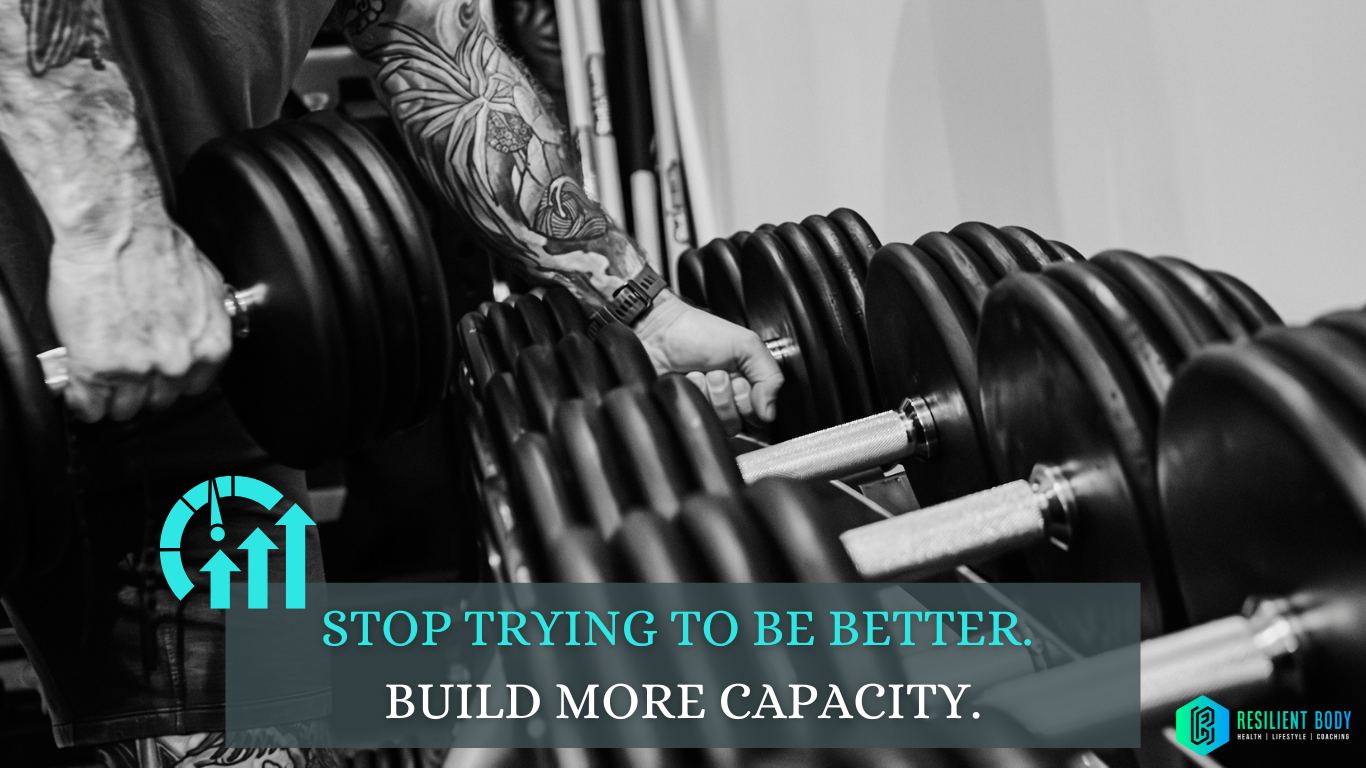
If you want 2026 to actually feel different, here’s the shift that matters most:
Most people don’t need more motivation.
They need more capacity — physically, mentally, and structurally.
The modern environment rewards overeating, under-recovering, and decision fatigue. Trying harder inside that reality usually leads to burnout, not consistency.
A better question than “How do I be more disciplined?” is:
“How do I make healthy choices easier to repeat?”
That’s the lens we use for everything at Resilient Body.
What We Mean by Capacity (Beyond Just Training)
Capacity isn’t willpower.
It’s margin for more.
It’s having enough strength, muscle, energy, and structure that life stress doesn’t immediately knock you off course.
That looks like:
strength and muscle that protect joints and metabolism
movement you can load and recover from
routines that survive busy weeks
nutrition that doesn’t require constant restraint
Training, nutrition, and lifestyle stack together here — not in silos.
How This Shows Up in Our Training (Group + Personal)
Across personal training and small group training, the foundation is the same.
We prioritize:
real strength via compound lifts and progressive loading
muscle development (protective, metabolic, and functional)
general physical preparedness — not just gym, but life fitness
mobility you earn, through full-range strength and control
Different formats.
Same system.
That’s why clients can move between PT and group without starting over.
Nutrition: Fewer Rules, Clearer Structure
Most people don’t struggle with nutrition because they lack knowledge.
They struggle because eating well requires too many decisions, too often. Cognitive (restraint) overload in an environment that isn’t yielding.
Here’s how we reduce that load in wellness coaching.
1. Shop for the Plate You Want to Eat
Decide earlier, not later.
At the grocery store:
start with protein you’ll realistically prepare or grab ready-to-eat (yes - at times that can be protein charged milks, jerky, and easier to go items)
add produce that works raw or cooked
layer in everything else afterward
processing that is functional (i.e. freezing, condensing, etc) is good versus engineered for flavor or satiety override is not
If protein and produce go in the cart first, they tend to show up on the plate. Don’t overthink it.
2. Build Plates Around Displacement, Not Restriction
On the plate:
anchor meals with protein
add fiber-rich volume
let everything else fit around that base
You’re not banning foods.
You’re letting protein and fiber take up space so appetite regulates naturally.
3. Reduce Friction at Home (Not Rules)
Instead of relying on restraint:
keep daily foods visible and easy to access
store “sometimes foods” out of sight, in opaque containers, or don’t keep them at home unless intentionally planned
This is design, not avoidance.
**Sometimes we need help beyond behavior for friction reduction and we are realists for when this is appropriate vs white knuckling through
Lifestyle: Make Consistency Survivable
We don’t coach perfect weeks.
We coach repeatable ones.
That means:
training frequency that fits real schedules
recovery that’s realistic, not idealized
systems that don’t collapse when plans change
Consistency isn’t about character.
It’s about structure you choose.
Start With Clarity (Before Choosing Anything)
If you’re unsure what kind of support fits you right now, start here:
This worksheet helps you:
clarify why change matters now
identify what didn’t work last year
spot constraints you need to work with
We use this exact framework in our coaching conversations.
How We Help You Apply This
Support might look like:
small group training + “Pods”(structure, coaching, community)
personal training (individual focus, confidence, complexity)
remote coaching (same individual focus, portability and work around your busy schedule)
wellness coaching (nutrition, stress, lifestyle integration)
or a combination that evolves over time
To explore what fits:
Free January Goal & Wellness Check-Ins (members email us)
Free consults (open to anyone)
Free week of small group classes
You don’t need to self-diagnose.
That’s our job.
The Takeaway
If you want 2026 to feel different, don’t aim for more discipline.
Build more capacity.
When your body and structure support you, consistency becomes repeatable — not fragile.
That’s the work.
And that’s what we’re here to help with.
If you’d like to watch a video instead, check out the link.
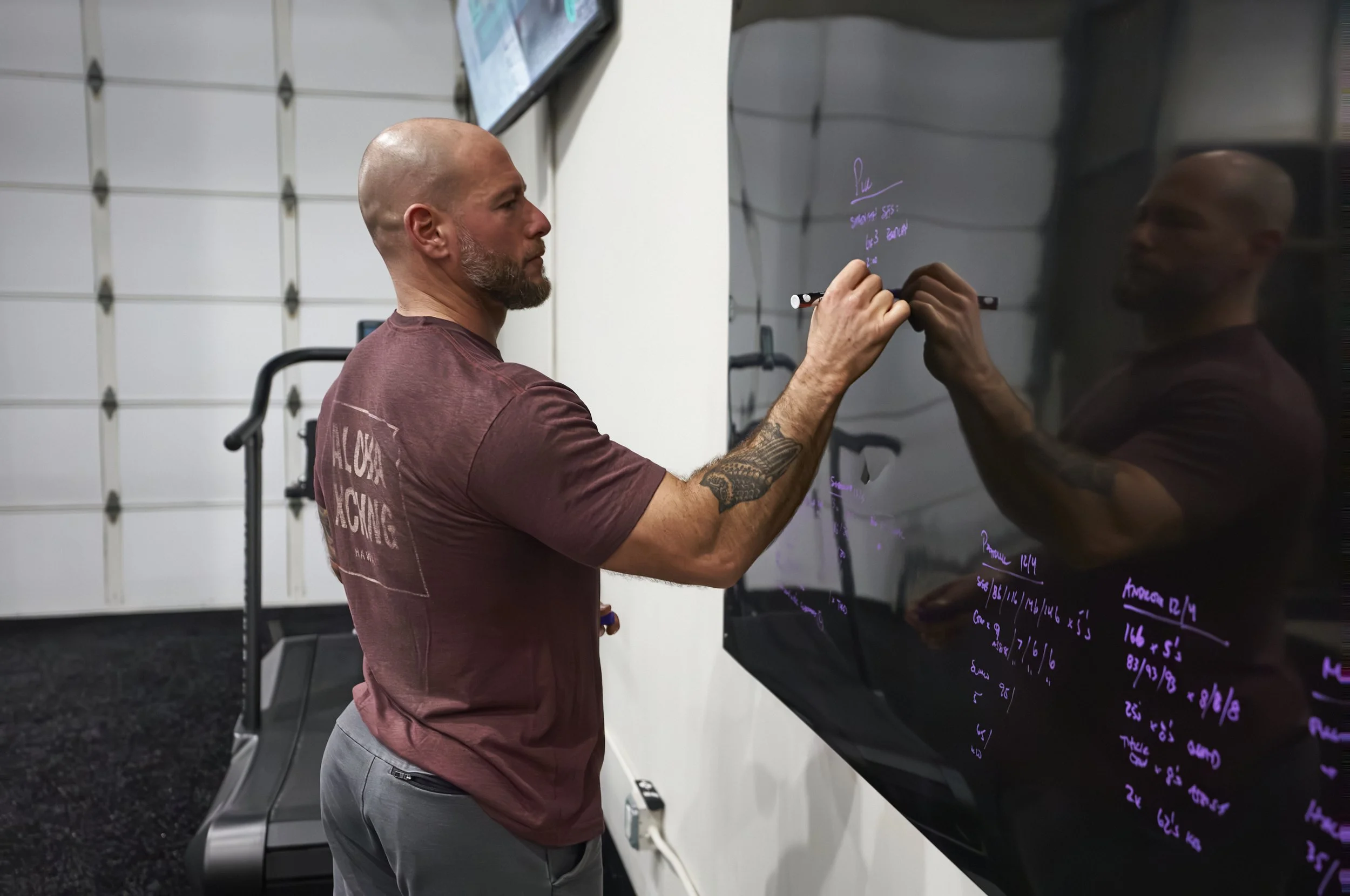
✨ Free January Goal & Wellness Check-Ins (Members)
All current members can book a complimentary Goal & Wellness Check-In — a short, focused conversation to:
reflect honestly on what didn’t work in 2025
identify what did work, even briefly
clarify what matters most going into 2026
explore what kind of structure would support that — without extremes or guilt
These sessions are designed to give clarity, not overwhelm.
CLICK THE LINK HERE (members use code: FREECHECK)
We’ll help you:
Identify where your personal capability gap might be
Spot invisible silos in training, recovery, or nutrition
Clarify what your body actually needs in early 2026
Map out a simple, realistic next step
These sessions are short, practical, and designed to give clarity — not overwhelm.
🔍 Free Consults
If you’re interested in Resilient Body but unsure where to start, we offer free consults — no pitch, no pressure.
🏋️ Free Week of Small Group Classes
If you’d rather experience what we do instead of overthinking it, you can try a free week of small group classes. Use code WKFREE at sign-up.
Come move, train, and see how it feels — no commitment required.
Sometimes the clearest answers come from showing up once.