

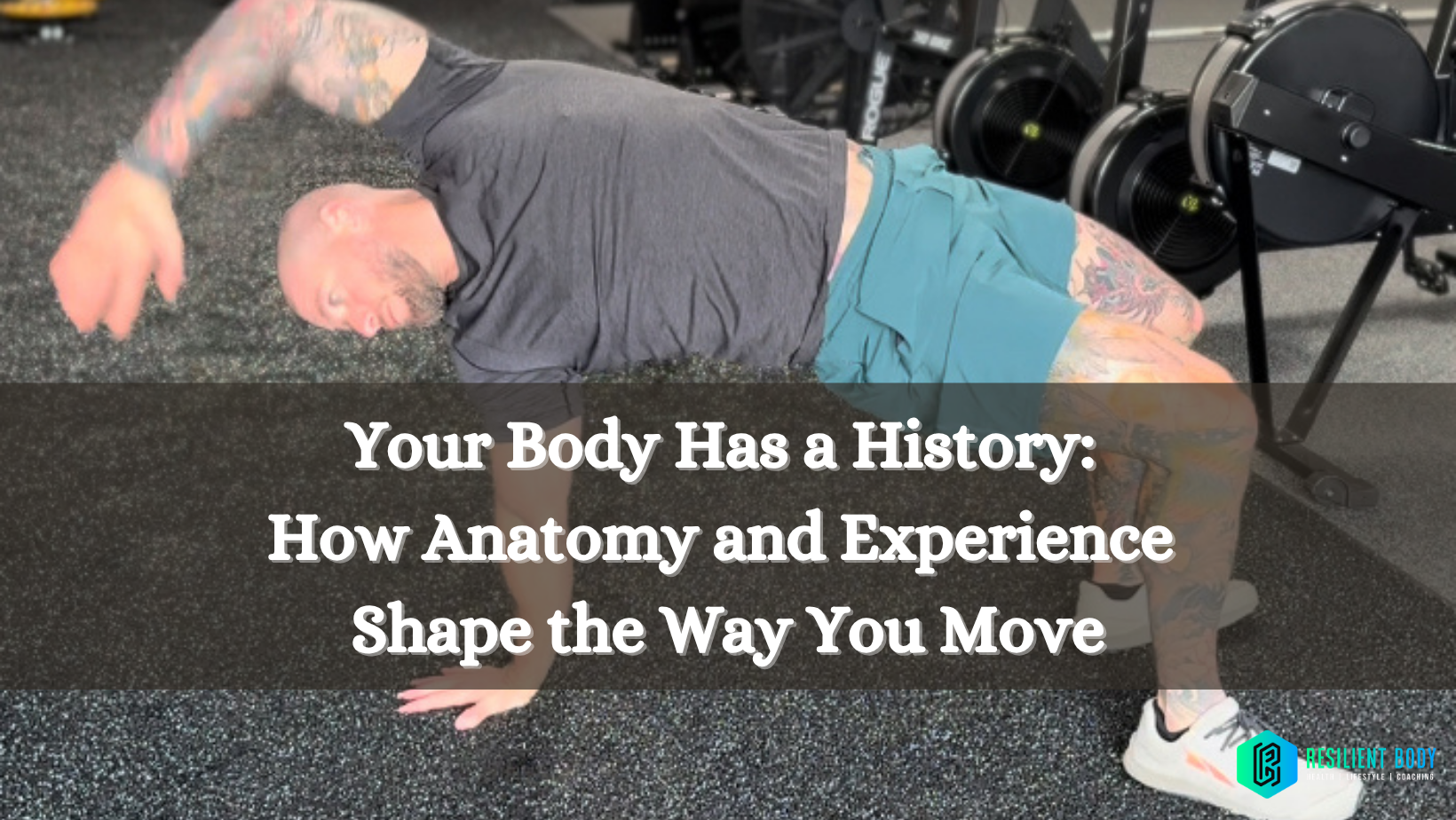
I’ve been thinking about a couple of clients recently whose squats don’t look quite like I would have expected based on their proportions. If you looked only at their limb lengths and tried to predict how they should squat, you might come up with a very reasonable explanation that doesn’t actually match what happens when they move.
That’s part of what makes coaching interesting. We can learn a lot from general principles, but every person brings a more complicated story into the gym than we can see from the outside. Their joints, previous injuries, training history, surgeries, habits, and comfort in a position all give us information about how to help them train.
Some of those things were shaped early in life, while others developed over years of work, sport, injury, or simply living. Our job is to put those pieces together, listen to the person, and find a productive place to begin.
What We Can See Is Only Part of the Picture
Squats are an easy place to start because they ask the hips, knees, ankles, and trunk to work together. People often talk about femur length and torso length when discussing why one person stays more upright while another leans farther forward, and those proportions can certainly influence the movement.
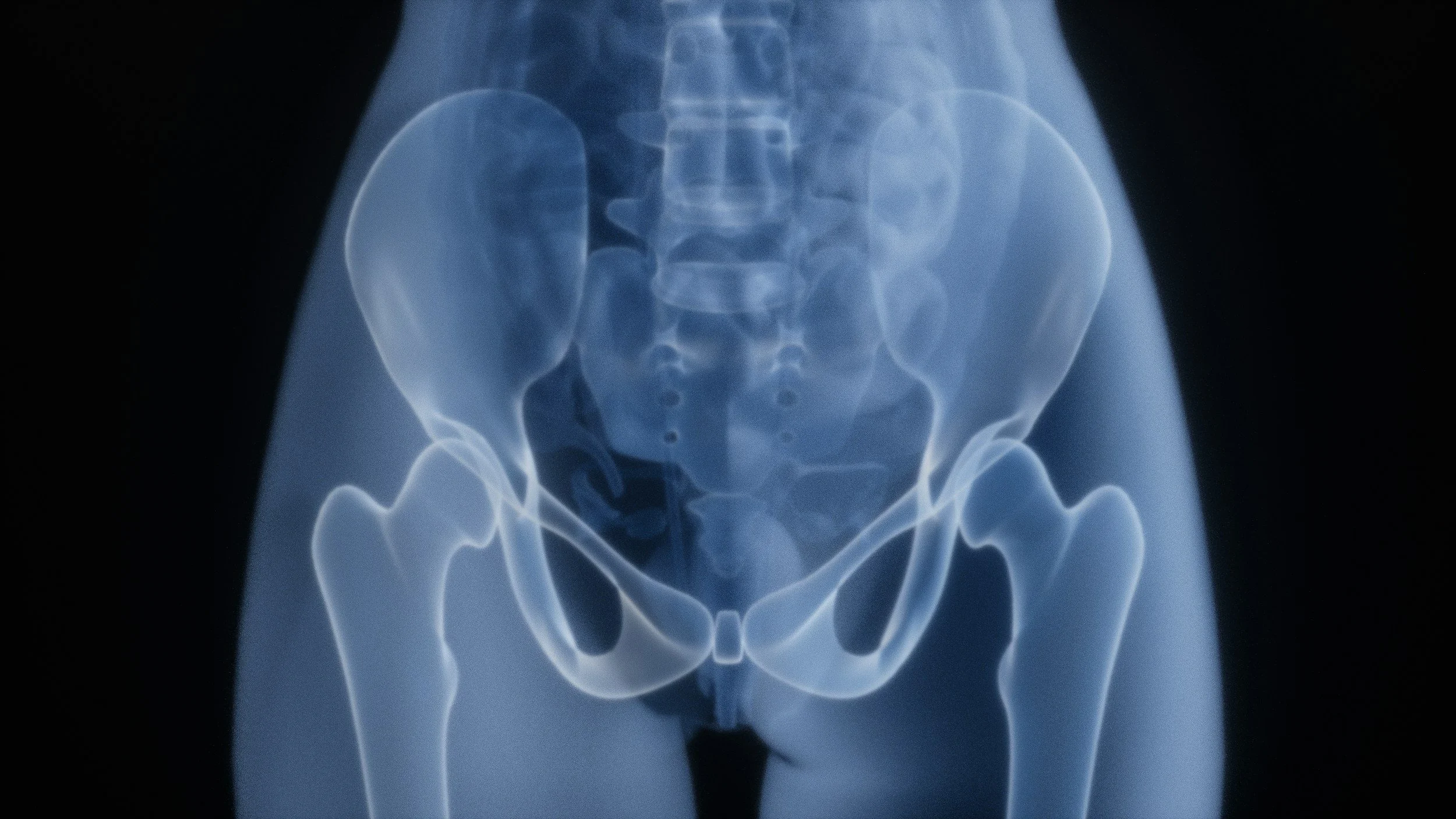
But limb length doesn’t tell us everything about someone’s hips. The shape and orientation of the hip socket, the shape of the top of the thigh bone, the way the pelvis moves, and the amount of motion someone can currently access may all influence how a squat feels and looks.
Even the two sides of the same person aren’t necessarily identical. One hip might have a different available range or feel more comfortable in a different position, and that difference could reflect a combination of structure, previous experience, strength, and other factors.
With one of the clients I’ve been thinking about, differences in hip socket orientation are one possible piece of the puzzle. A movement assessment alone can’t tell us exactly what the socket looks like, but it can help us see what happens when we change the position, ask different questions, and pay attention to the response.
That might mean trying a slightly different stance, changing where the weight is held, elevating the heels, or adjusting the range for the moment. Then we watch what happens and ask how it feels. The response gives us better information than a prediction based on body proportions alone.
Your Shoulders Have Their Own Story, Too
The shoulder is another place where people can have meaningful structural differences (It’s also the most mobile joint in the body). One example is the acromion, a part of the shoulder blade that forms a bony roof above the shoulder joint. Its shape varies from person to person, and researchers have described common patterns as flatter, curved, or more hooked.
That structure is one piece of a very busy neighborhood of what would appear on an x-ray like many free-floating parts (unlike some other major joints). The shoulder blade, rib cage, upper back, muscles, tendons, and nervous system all contribute to how someone reaches, presses, and moves overhead.
Research has found relationships between some acromion shapes and certain shoulder conditions, but the shape of one structure does not tell us the whole story of a person’s shoulder. Someone can have anatomical differences and move comfortably; someone else might have shoulder symptoms that need a closer look for several reasons.
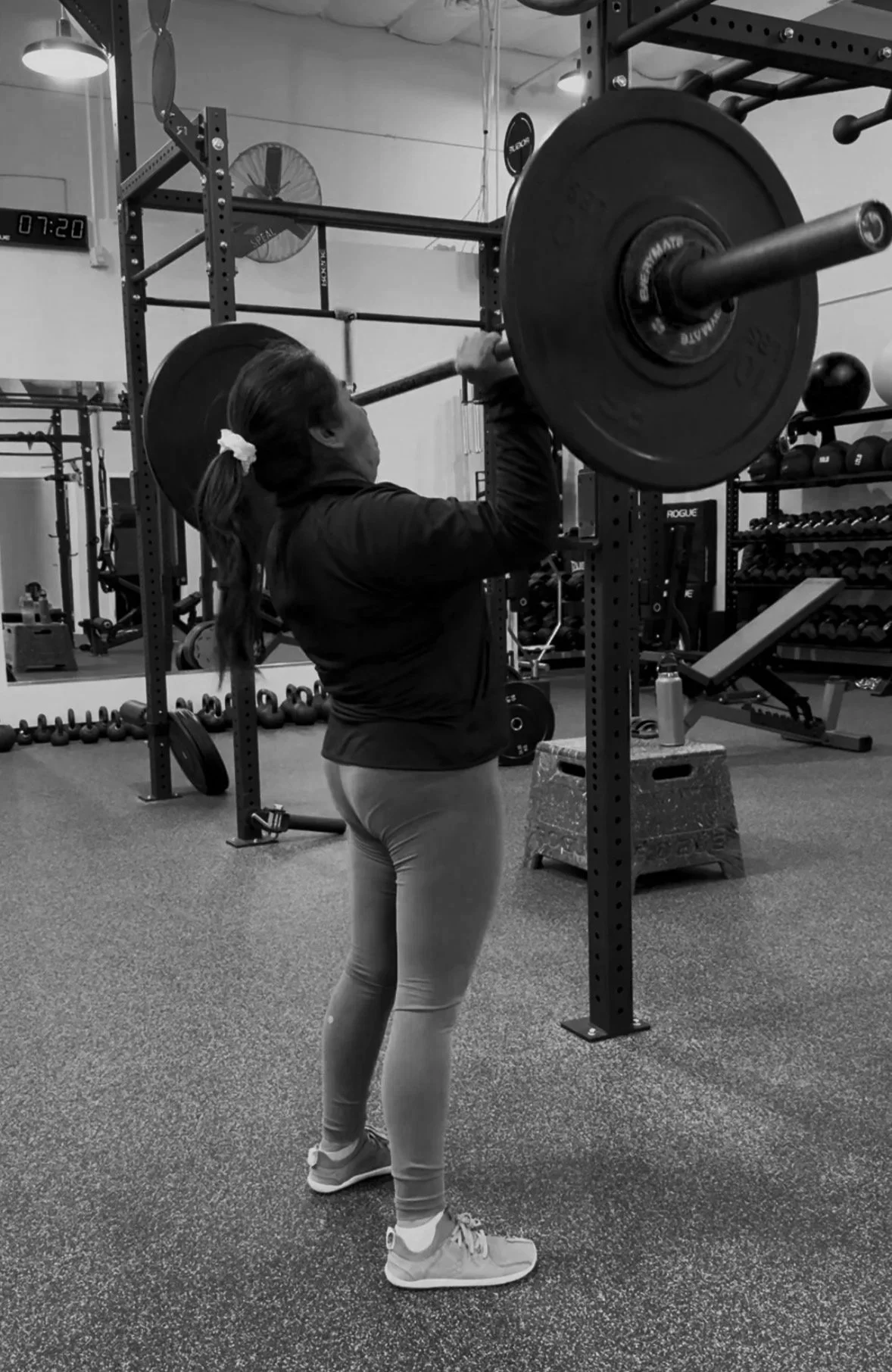
In the gym, we pay attention to what the person can do, what they want to do, and how different movements feel. A dumbbell press, an angled press, or a change in range may give us a useful starting point while we continue building strength and exploring what the shoulder can tolerate.
Anatomy Is Partly Inherited and Partly Shaped Over Time
We tend to think of anatomy as something we’re born with and carry unchanged throughout life. Some features are influenced by genetics and development, but our bodies also adapt to the demands and experiences they encounter over time.
One example comes from research on the developing hip. Certain changes in the shape of the top of the thigh bone, often called cam morphology, have been associated with high-load sporting activity (think hockey, soccer, basketball, etc) during adolescence, when the skeleton is still maturing. Researchers are still studying the details, including why some people develop morphology that creates symptoms while others don’t.
A person can have that shape and feel fine, and training history is only one part of the picture. What I find interesting is the broader lesson: the body you bring into the gym today reflects years of development and adaptation, not just a set of dimensions you were born with.
Previous injuries and surgery can add another chapter. I’ve worked with a client who has a noticeably rounded position through the upper back and neck following open heart surgery. Research has observed changes in upper body posture and thoracic movement after this type of surgery, particularly during recovery, although we can’t assume surgery explains every feature of an individual person’s posture.
That history matters when we coach. We want to understand how the person moves and breathes now, what feels difficult or restricted, and which positions they would like to regain. We can respect what their body has been through while still looking for opportunities to build strength and movement.
A Limitation Is Information to Explore
When a position feels limited, the next question is what we can learn from it. Does the position change after a little movement? Can the person access more range with support? Is the range available but difficult to control? Does it feel different with a lighter load, a slower tempo, or a change in setup?
Sometimes stretching is useful. Sometimes we spend time building strength in the range someone already has, using an isometric hold or a controlled lowering phase. Other times, gradual exposure to the movement itself gives the person the practice and confidence they need.
We might also find that a small change in the exercise lets someone train effectively while we work on a more challenging position separately. A box squat, for example, can provide a consistent depth to build strength while we continue exploring deeper ranges that matter to that person.
There isn’t one tool that answers every question. We choose the tool based on what we’re seeing, what the person is feeling, and whether the change helps them move toward their goal. Not everyone uses the same tools either.
Comfort Is Valuable Feedback, and So Is Capacity
We want clients to have a say in what they feel. If a movement feels awkward, pinchy, unstable, or simply different from one side to the other, that’s useful information for the coach and client to discuss.
At the same time, we want to understand what happens as someone becomes more familiar with a position. A movement that feels challenging today may become more comfortable with practice, appropriate loading, and time. We can work toward those harder positions gradually while giving someone a version they can train well right now.
That process also helps us decide when a different question needs to be asked. If a limitation or symptom isn’t responding as expected, or something about it falls outside what we can appropriately assess as coaches, collaborating with the person’s healthcare provider can help guide the next step.
This Is What Individualized Coaching Looks Like
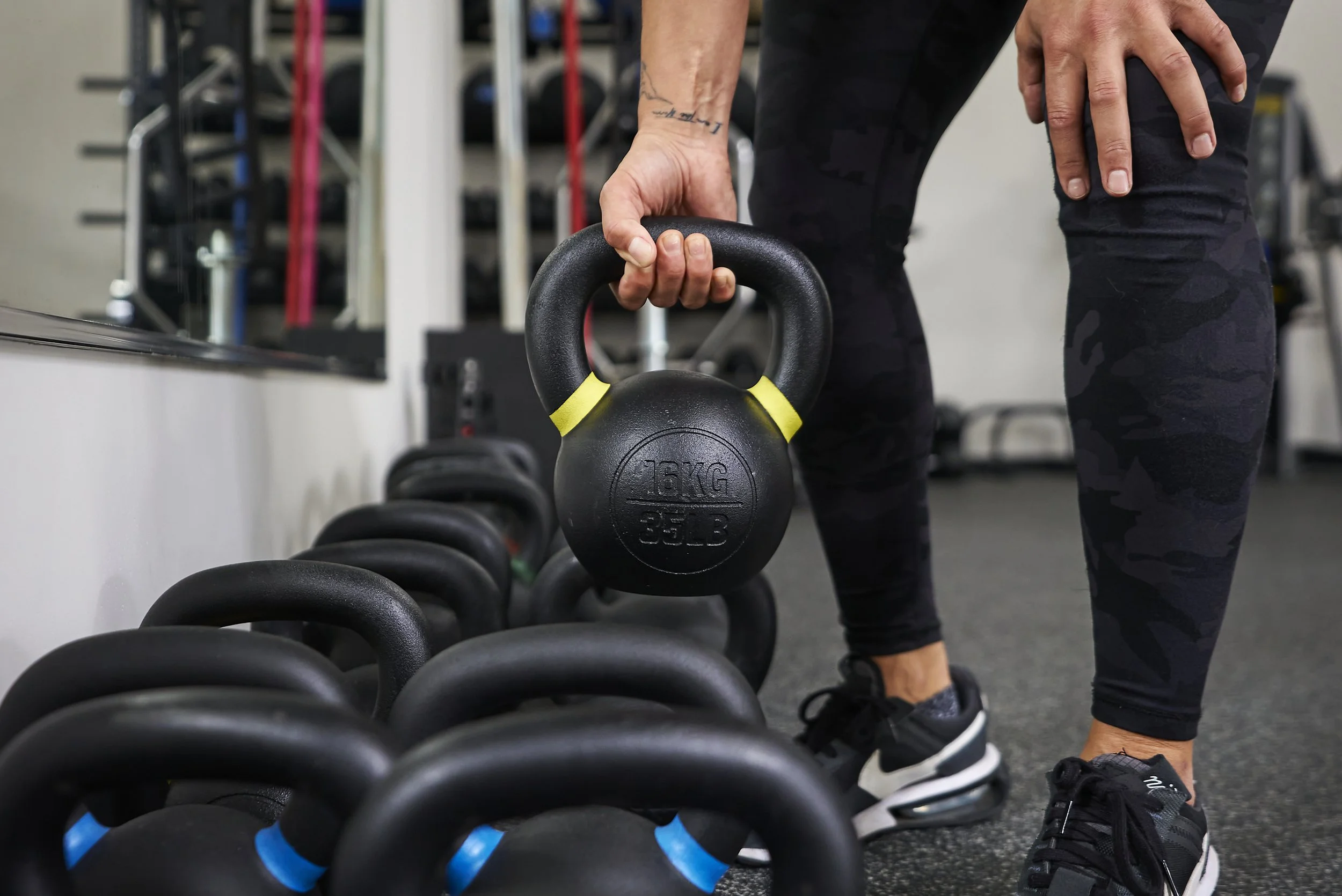
A room full of people can be working on the same general goal while each person receives a slightly different version of the exercise. One member may squat to a box, another may use a heel elevation, a lower bar position or different bar, and another may work through a deeper range with a weight held in front (or even a machine instead).
We use those differences to give each person a useful challenge and a way to progress. As they get stronger, gain experience, and tell us more about what they feel, the plan can change.
That’s the part of coaching we value most at Resilient Body. We get to know the person, look at what is happening, and work together to build more options over time. Your body has a history, and it also has the capacity to keep adapting.
If there’s a movement that has always felt different, awkward, or difficult for you, bring it up with your coach. We’d love to take a look, hear what you notice, and explore what might help.
📣 Quick Announcements:
DEXA Scan Day is Next Week 11/5
BodySpec is coming to Resilient Body Thursday, November 5, from 11:30 a.m.–6:30 p.m. All 24 slots available have sold out. Please see the board for the specifics on how to prepare for your scan and let a coach know if you can’t find your confirmation email.
🎃October Challenge is ON! The Hold & Haul Gauntlet will be held in both class (this week) and PT sessions. It’s super quick (5minutes), so if you want to give it a whirl, you can also do it during open gym or at sessions end as long as a coach is here to watch 😎
Assisted Stretch sessions with Julie are underway! Many of you may not realize that Julie has been an assisted stretch practitioner for quite some time and knows exactly what to look for. These individualized sessions give you dedicated time to work on range of motion, explore positions that may be harder to access on your own, and simply spend some focused time addressing areas that feel stiff or restricted. You can book Julie here.
Massage & Manual Therapy with Evan on Saturdays and Sundays: Evan is now available Tuesdays, Thursdays, Saturdays and Sundays. If you need a little TLC from life or training, you can book Evan here.
🐕 Resilient Body's cutest HALLOWEEN dog is wraps up this week as well: Make sure to get your pooch (or hamster) in their cutest costume on the board!
New Personal Training Slots Available: Book a consultation if you're ready for more individualized coaching. – Book a consult if you’re ready to level up
💬 Got questions? Reply here or ask your coach next time you're in