

“Just Get It Out of the House”- Why Your Food Environment Matters More Than Willpower
If there is one nutrition strategy that has held up for me personally over the long haul, and one we come back to again and again with clients, it is this:
Do not rely on willpower. Change the environment.
Often that starts with something very simple and very effective:
Just do not keep certain foods in the house.
At first glance, this can sound extreme. Or rigid. Or anti-balance.
It is not. It is realistic.
Why This Works (And Why It Is Not a Failure)
Our physiology evolved in an environment where food was harder to get, calories were scarce, and highly palatable combinations of sugar, fat, and salt were rare.
That is not the environment we live in now.
Today we are surrounded by foods that are engineered to be hyper rewarding, cheap, convenient, and constantly available. Many are designed to override natural fullness signals and keep us reaching for more.
Our brains have not caught up to the speed of this change.
So when people struggle with overeating at home, especially at night, it is not a character flaw. It is a mismatch between biology and environment.
This same mismatch helps explain the obesity epidemic, why food deserts matter, and why “just eat less” has never worked at scale.
The environment matters more than motivation.
Decision Fatigue Shows Up at Home
One of the most overlooked drivers of eating behavior is decision fatigue.
For most people, decision fatigue is highest:
At the end of the day
After work, kids, stress, and constant small choices
During especially demanding weeks or months
That is exactly when willpower is lowest.
Asking yourself to make good food decisions when your brain is already exhausted is not a fair fight.
If highly tempting foods are within arm’s reach at home, you are forced to negotiate with a tired nervous system every single night.
Removing certain foods from the house is not about discipline.
It is about reducing decisions when decisions are hardest to make.
A Lesson I Learned Over Time
Years ago, while reading work from the Precision Nutrition, their dieticians and other smart minds in the spaces of nutrition and psychology, I kept seeing the same idea repeated:
Control what comes into the house, and you will not have to fight it later.
At the time, I thought it sounded restrictive and anti-flexibility. I thought there had to be a way to have you cake and eat it too (pun intended).
Over the years, my view shifted.
In a food environment intentionally designed to push past our internal brakes, sometimes the most realistic option is not letting certain things in to begin with.
Not forever. Not always. But often enough.
This Is Not “Never.” It Is “Not Here.”
Let us be very clear about what this is not.
This is not about banning foods. This is not about never eating treats. This is not about perfection.
In our house:
We go out for ice cream
We bring home treats sometimes
Holidays and special occasions are still special
The difference is frequency and location.
More often than not:
Those foods live outside the house
Or they show up intentionally, not automatically
That single change removes hundreds of low-grade daily decisions.
The Always / Sometimes / Rarely Framework
This is one of the most practical tools we use with clients.
Always (Easy Access at Home)
Foods that support daily fueling and recovery:
Lean proteins
Fruits and vegetables
Whole-food carbohydrates
Simple snacks you feel good eating regularly
These should be visible, convenient, and boring in the best way.
Sometimes
Foods you enjoy but do not want on autopilot:
Higher-calorie snacks
Alcohol
Desserts
Specialty items
These come into the house occasionally or in smaller amounts.
Rarely or “Not at Home”
Foods that:
You tend to overeat when stressed or tired
You would not want kids or guests grabbing regularly
You do not actually enjoy mindfully
These foods are not banned.
They are outsourced.
Eaten out. Shared. Planned. Enjoyed on purpose.
Substitutes That Actually Help
This approach is not about white-knuckling cravings.
It is about having options that satisfy without derailing your goals.
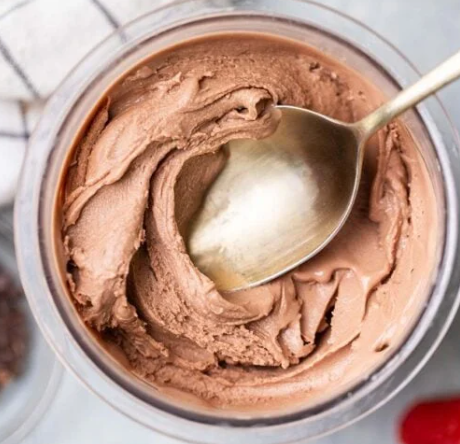
A personal example for me has been high-protein ice cream.
After hearing about it endlessly, I finally got a Ninja Creami. It has been a great example of how environment control does not have to mean joyless eating.
One version I make regularly:
Around 30g protein
Under ~200 calories for the entire pint
Simple example recipe:
1 cup skim or ultra-filtered milk (like Fairlife)
1 scoop chocolate protein powder
1 tbsp cocoa powder
Sweetener to taste
Pinch of salt
Freeze, spin, enjoy.
And to be clear:
Sometimes I make versions with whole chocolate milk and mix-ins.
The difference is that it is a choice, not the default. AND, there are many other types of easy top grab substitutes that don’t require an apparatus like a ninja creami maker!
This Still Works If You Eat Out Often
Even if most of your meals happen outside the house, this strategy still applies.
You can still have:
Go-to choices
Sometimes foods
Rarely foods
The principle is the same: reduce friction in the direction you want to go.
The Bigger Picture
This is not about being perfect.
It is about stacking small, easy and better choices that quietly add up.
When you control your food environment:
You rely less on willpower
You make better decisions by default
Kids grow up with more balanced norms
Nutrition stops feeling like a daily battle
In a world that makes saying yes incredibly easy, sometimes the healthiest move is simply not having to say no.

📣 Quick Announcements:
😎💪 By now, you are likely seeing new faces around the gym as we continue to build out the coaching team. Each new coach brings distinct skill sets - from strength and movement quality, to conditioning, return-to-training, and working with a wide range of bodies and goals. We’ll share proper introductions soon so you can get to know them better.
🏋️♂️ We’re in the process of expanding our training formats AND delivery, including:
Semi-Private Training - small groups with individualized programming, close coaching attention, and a balance of personal focus and community.
Pod-Style Training - consistent small groups training together on a shared framework, emphasizing progression, accountability, and sustainability.
App-based Training - from training templates to asynchronous coaching feedback; and some inclusive with memberships.
These options are designed to create more flexibility, more access to coaching, and more ways to train well depending on where you’re at and what you need.
New Personal Training Slots Available – Book a consult if you’re ready to level up
💬 Got questions? Reply here or ask your coach next time you're in