

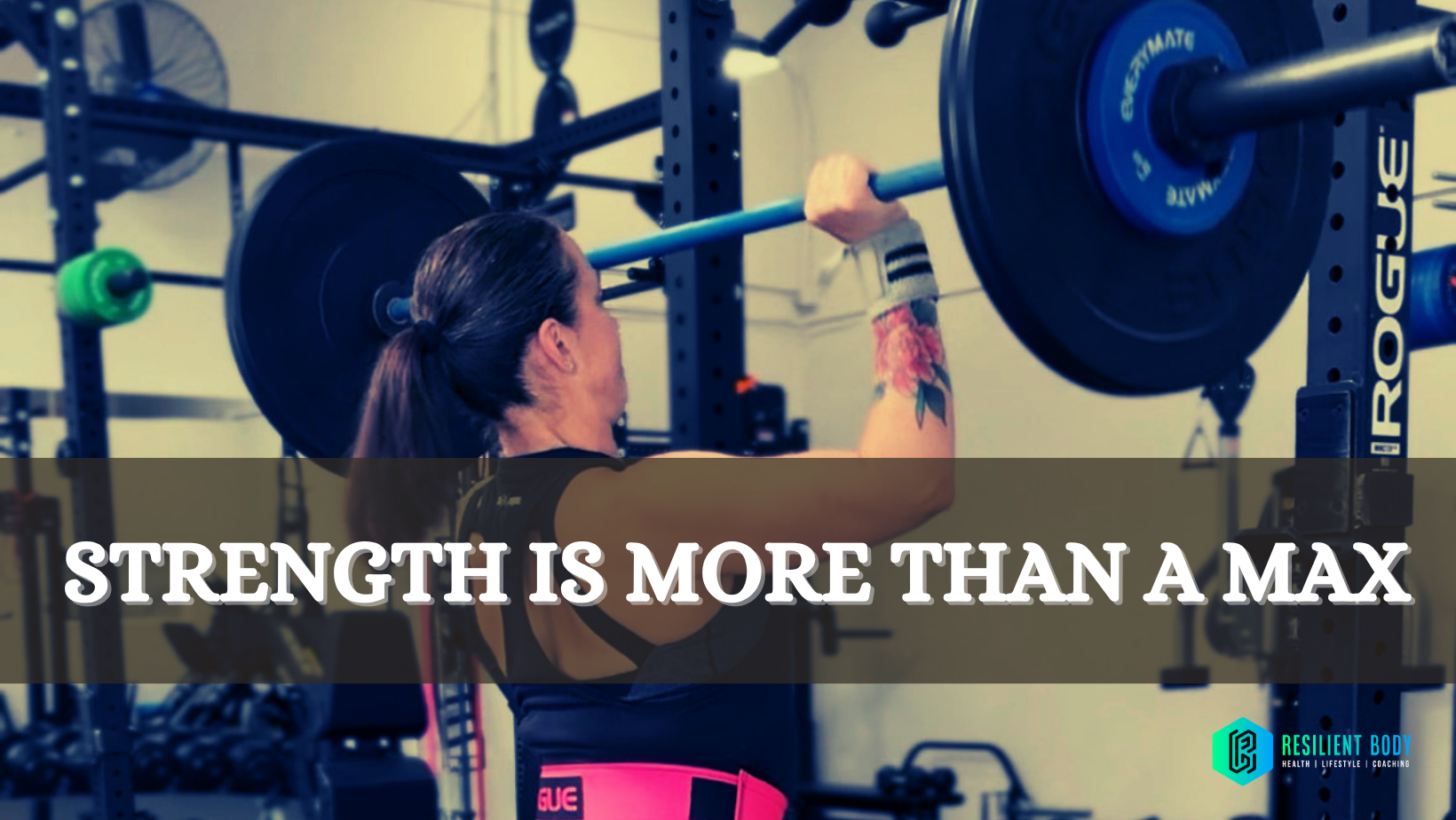
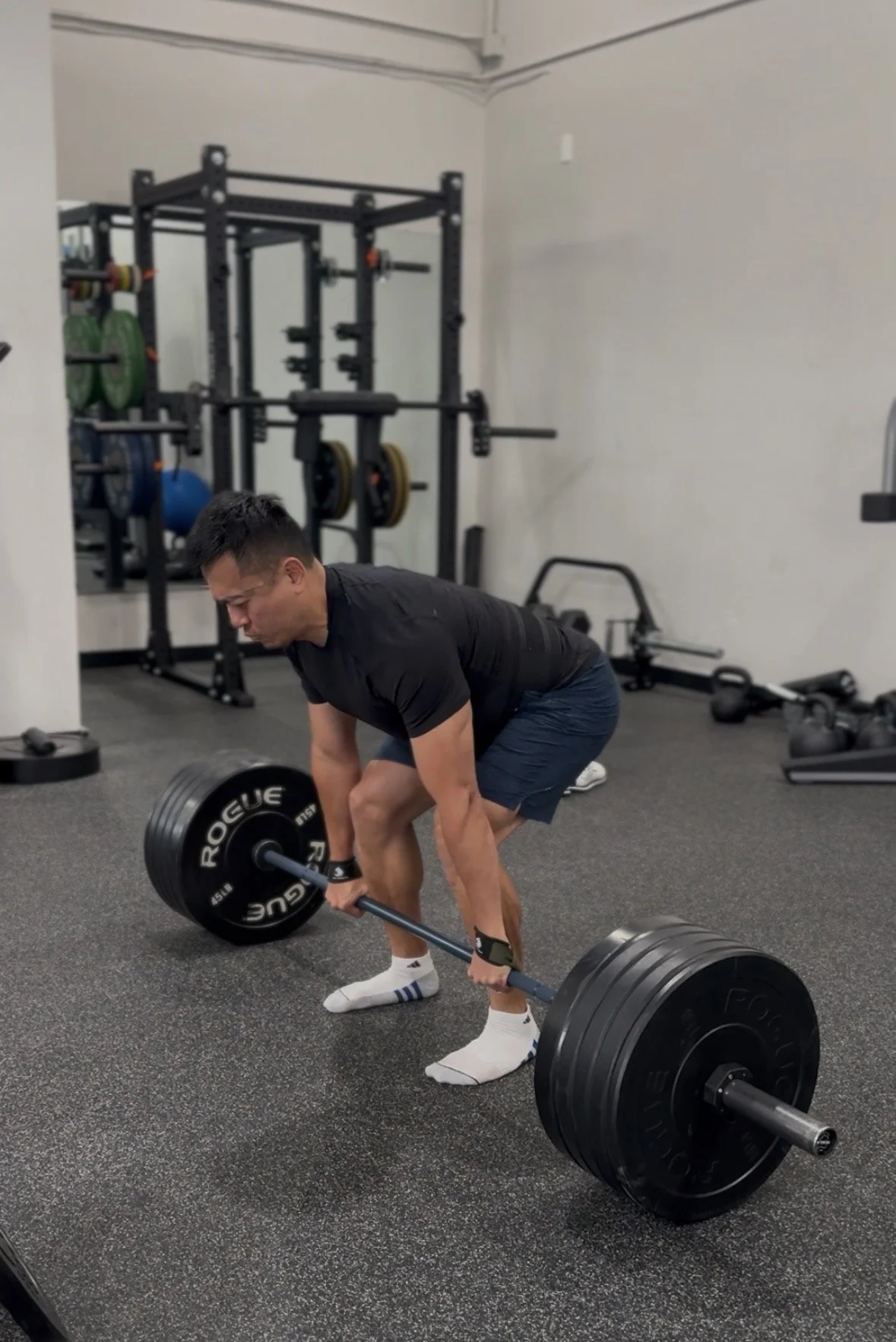
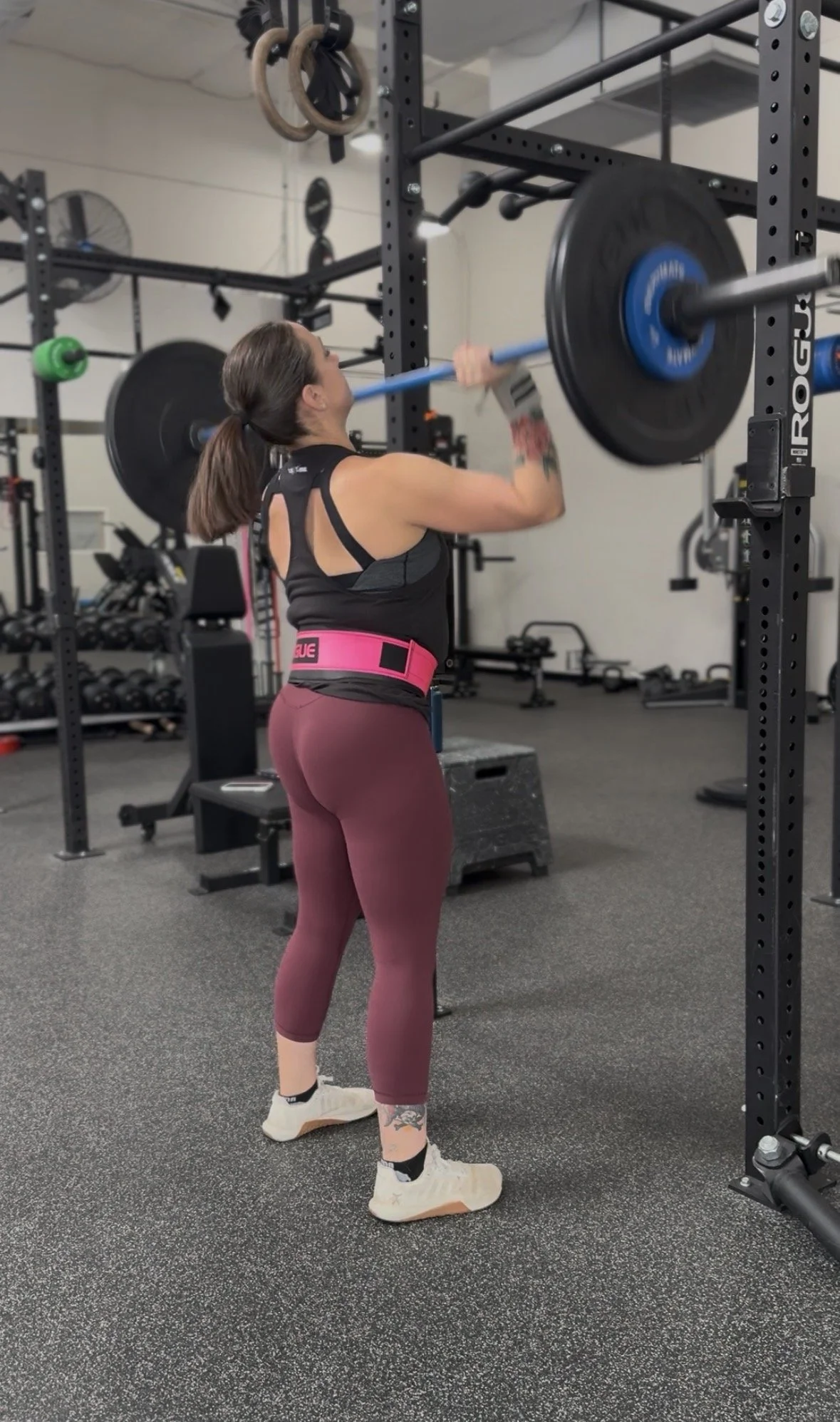
Last week, we put some numbers on the board. After several weeks of progressively heavier training, members worked up to heavy singles and one-rep maxes in the deadlift and strict press. We saw plenty of personal records, some very strong performances, and for quite a few people, a new number that didn't exist before.
Last week we talked about why we occasionally test strength, how to approach a maximal lift, and why the result should be treated as a snapshot rather than a report card. Now we actually have those snapshots, which gives us an opportunity to talk about the other reason we test: there is quite a bit we can learn from them.
A Max Gives Us a Useful Reference Point
The most obvious thing a max tells us is approximately how strong you are in that particular movement right now. That may sound overly simple, but having an actual number gives us a much better reference point for the training that follows.
If you deadlifted 300 pounds, we now have a pretty good idea of what 200, 225, or 250 pounds represents for you. If your previous best was 275, we also have fairly straightforward evidence that your ability to produce force in that movement has improved. That doesn't mean we're going to pull out a calculator and prescribe every exercise as a percentage of your max, but knowing roughly where your ceiling sits gives us context for what should be light, moderate, heavy, or very heavy.
It can also make the subjective information we use every week more useful. We frequently ask how many repetitions you think you had left in a set, or how difficult a particular weight felt. If we have a reasonably current idea of your maximal strength, we can compare what you're feeling with what we're seeing and what we know about your actual capacity. Over time, you get better at judging your own effort and we get better at selecting loads without needing to test your limit very often.
We Can Extrapolate Beyond a Single Lift, Within Reason
A deadlift max is first and foremost a measure of how much you can deadlift. A strict press max tells us how much you can strictly press overhead. Strength is specific enough that we shouldn't pretend either number gives us some universal measure of how strong you are.
At the same time, your strength isn't just found from one exercise.
A heavy deadlift requires a lot of force from the legs and hips while the trunk, grip, and upper body create enough tension to transfer that force into the bar. If your ability to do that improves substantially over time, we can reasonably expect some of that increased capacity to show up in other lower-body and pulling tasks. The same is true of the strict press. Getting substantially stronger overhead probably tells us something about the development of your upper-body pressing strength even though it doesn't tell us exactly what you'll bench press or how heavy a dumbbell you'll use next Tuesday.
This is where we have to be careful with the word "extrapolate." If your deadlift improves by 10 percent, that doesn't mean every lower-body exercise suddenly improves by 10 percent. Technique, range of motion, leverage, familiarity, muscle mass, and the demands of the individual exercise all matter. What we can say is that a meaningful improvement in your ability to produce force in a well-established movement is probably telling us something about a broader change in physical capacity, particularly when it matches what we've been seeing elsewhere in your training.
What Can the Numbers Tell Us?
Sometimes the interesting information isn't the max itself. It's how that number compares with everything else we already know about you.
A strength test can give us clues about:
Changes in maximal strength: Did you actually become capable of producing more force than the last time we tested?
Absolute vs. relative strength: How much can you lift overall, and how does that compare with your bodyweight?
Upper- vs. lower-body strength: Do the deadlift and press generally match what we've observed throughout your training, or is one developing much faster than the other?
Training loads: Does your new max change what we consider light, moderate, or heavy for future work?
Your perception of effort: Do the loads you've been calling an RPE 7 or 8 line up reasonably well with your demonstrated strength?
Potential areas to develop: Does the test, combined with what we've observed in training, suggest that more strength, muscle, technical practice, heavier exposure, or another physical quality might deserve attention?
None of those automatically identifies a problem. They're clues, not diagnoses.
Someone who can produce an enormous amount of force for one repetition may still have plenty of room to improve muscular endurance or work capacity. Someone else may be relatively strong for their size but benefit from adding muscle and increasing their absolute strength. A newer lifter might possess more physical strength than their max demonstrates because technique and familiarity with very heavy loading are still developing.
The number becomes more useful when we put it alongside bodyweight, training history, other lifts, rep performance, and what we've watched you do week after week. That's why we're hesitant to turn any single gym number into a definition of whether somebody is "strong."
The Way You Lifted It Matters
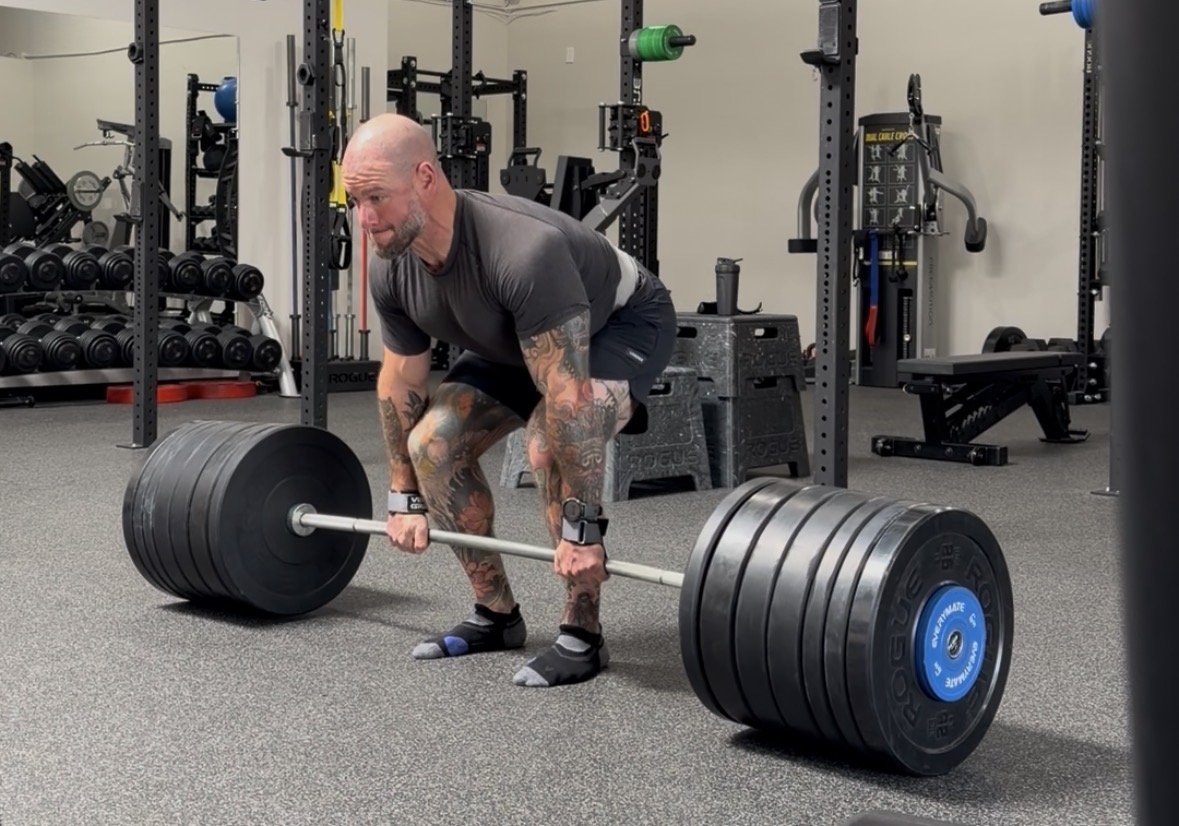
We also learned things Friday that aren't written on the leaderboard. As the weight became heavier, we got to watch how you handled it. Did the bar continue to move relatively quickly until you reached a very clear strength ceiling? Did a particular portion of the lift consistently slow down? Did your technique stay mostly intact as the load increased, or did your strategy change substantially once things got heavy? Were you comfortable creating a lot of tension and committing to the lift, or was simply having that much weight in your hands a relatively new experience?
Two people can finish with the exact same max and give us very different information along the way. One may need more force. Another may benefit from more technical practice or more exposure to heavier loading. In some cases, adding muscle might give us more to work with. In others, there may not be anything particularly interesting to "fix" at all. We just keep training and give the process more time.
The spreadsheet gives us the number. Watching the attempts that produced it gives us context. The two together are considerably more useful than either one alone.
Your Max Can Help Guide Training Without Dictating It
None of this means your next program should be reverse engineered entirely from one deadlift and one press. Good programming doesn't work that neatly, and we have much more information available to us than two numbers from one Friday.
What the test does is give us another objective marker to add to everything else. We can use it to estimate appropriate loading, compare progress over time, identify obvious discrepancies worth paying attention to, and occasionally confirm that the work we're doing is producing the adaptation we intended.
Then we go back to training, because the goal isn't simply to become increasingly specialized at producing the biggest possible deadlift and strict press. We absolutely want to make you stronger, and heavy strength training will continue to be a major part of what we do, but strength is one component of a much larger picture of physical capability.
We also want muscle, cardiovascular fitness, coordination, balance, mobility where you need it, the ability to repeat efforts, and the ability to produce force at different speeds. Sometimes improving one of those qualities even helps us come back and express more strength the next time we test.
Which brings us to September.
From Strength to Power
In August, the question was essentially how much force can you produce? This month we're going to change one part of that question and look at how quickly you can produce it.
That's power, or what we often refer to in our programming as speed-strength.
Strength and power are closely related, but they're not interchangeable. Having a larger base of strength gives you the potential to produce more force, but being able to produce a lot of force doesn't necessarily mean you can produce it quickly. That's why some of our training deliberately asks you to move with speed rather than simply adding more weight.
It's also one of the primary qualities we train in Perform. Jumps, faster concentric movements, Olympic lifting variations where appropriate, and other speed-strength work give us ways to train force production under a very different constraint: time.
That matters for athletes for obvious reasons, but the ability to produce force quickly isn't exclusively an athletic quality. Running, accelerating, jumping, reacting, catching yourself when you lose your balance, getting up quickly, and plenty of ordinary physical tasks don't give you unlimited time to gradually develop force. We want access to strength, but we also want the ability to use it quickly when the situation calls for it.
So that's where our September challenge is headed. We'll announce the exact test and standards shortly, but this time the goal won't be to see who can move the most weight. We're going to put a number on a different physical quality and give ourselves another benchmark that we can revisit down the road.
August gave us some useful numbers. Now we get to do something with them, keep training, and find out what else you're capable of.
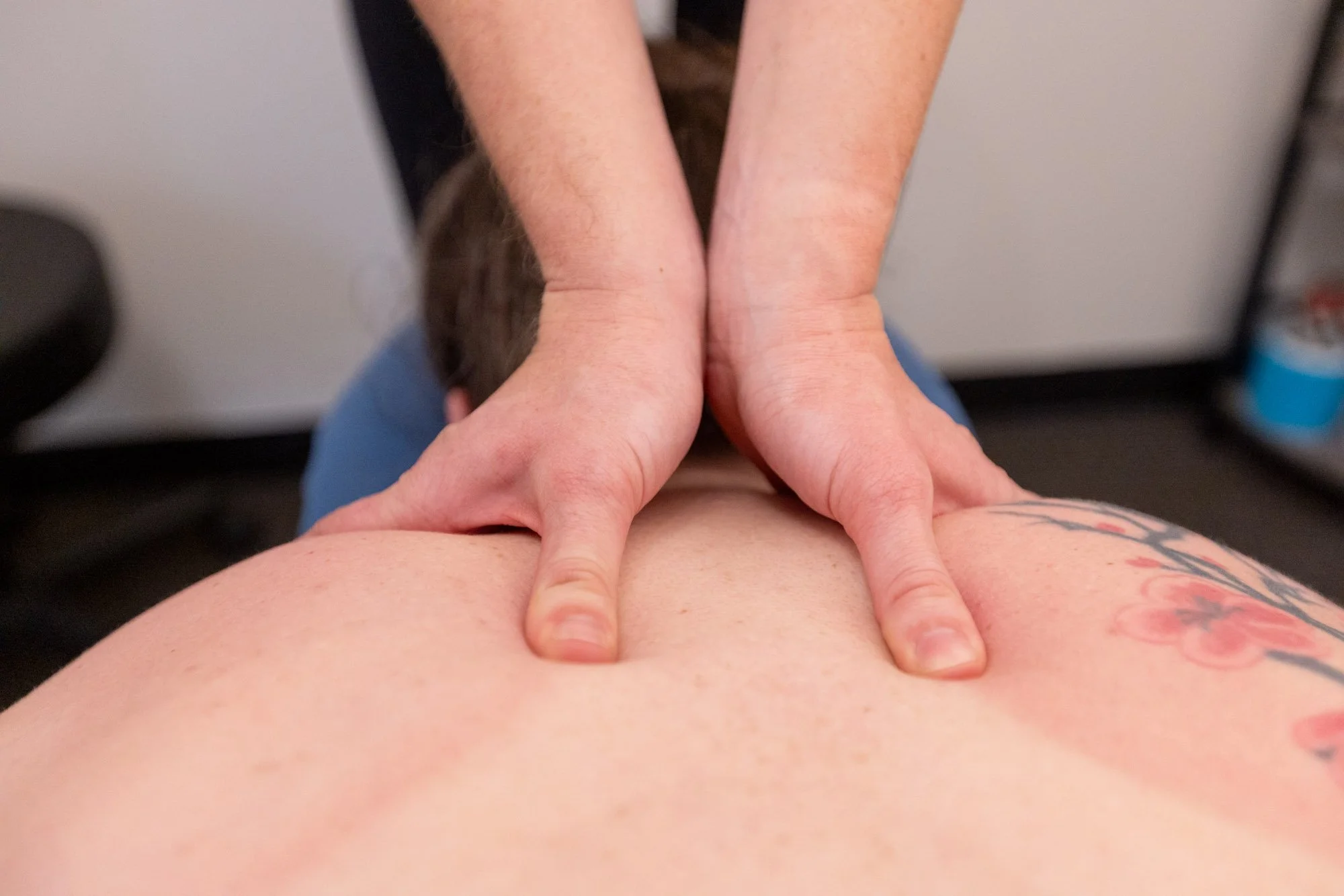
Evan Is Officially Here
If you didn't get a chance to meet Evan during his complimentary demo sessions, Evan Bachelder is now officially seeing clients at Resilient Body. Evan completed an 800-hour massage therapy program covering both Eastern and Western modalities, and his approach combines deep tissue work, trigger point release, myofascial release, cupping, IASTM, heat and ice therapy, hot stones, and other techniques depending on what makes sense for the person in front of him.
His work can complement training and recovery, but you certainly don't need to wait until something hurts to book. Whether you've been training hard, have an area that's been feeling restricted, or simply want some dedicated recovery time, Evan is now available for massage and manual therapy sessions at Resilient Body.
📣 Quick Announcements:
September Challenge: POWER. We tested maximal strength in August. This month we're changing the question and testing how quickly you can produce force. Full challenge details coming soon…
Holiday Hours: Saturday 9a Stretch + Restore Only. Monday 9a only consolidated Hybrid Strength Class.
Massage & Manual Therapy with Evan: Evan is officially taking appointments. [BOOK WITH EVAN]
Bring a Friend Saturdays: Bring a friend and you're both free for either Saturday morning class. If they sign up, receive $100 off your next package.
New Personal Training Slots Available: Book a consultation if you're ready for more individualized coaching. – Book a consult if you’re ready to level up
💬 Got questions? Reply here or ask your coach next time you're in