

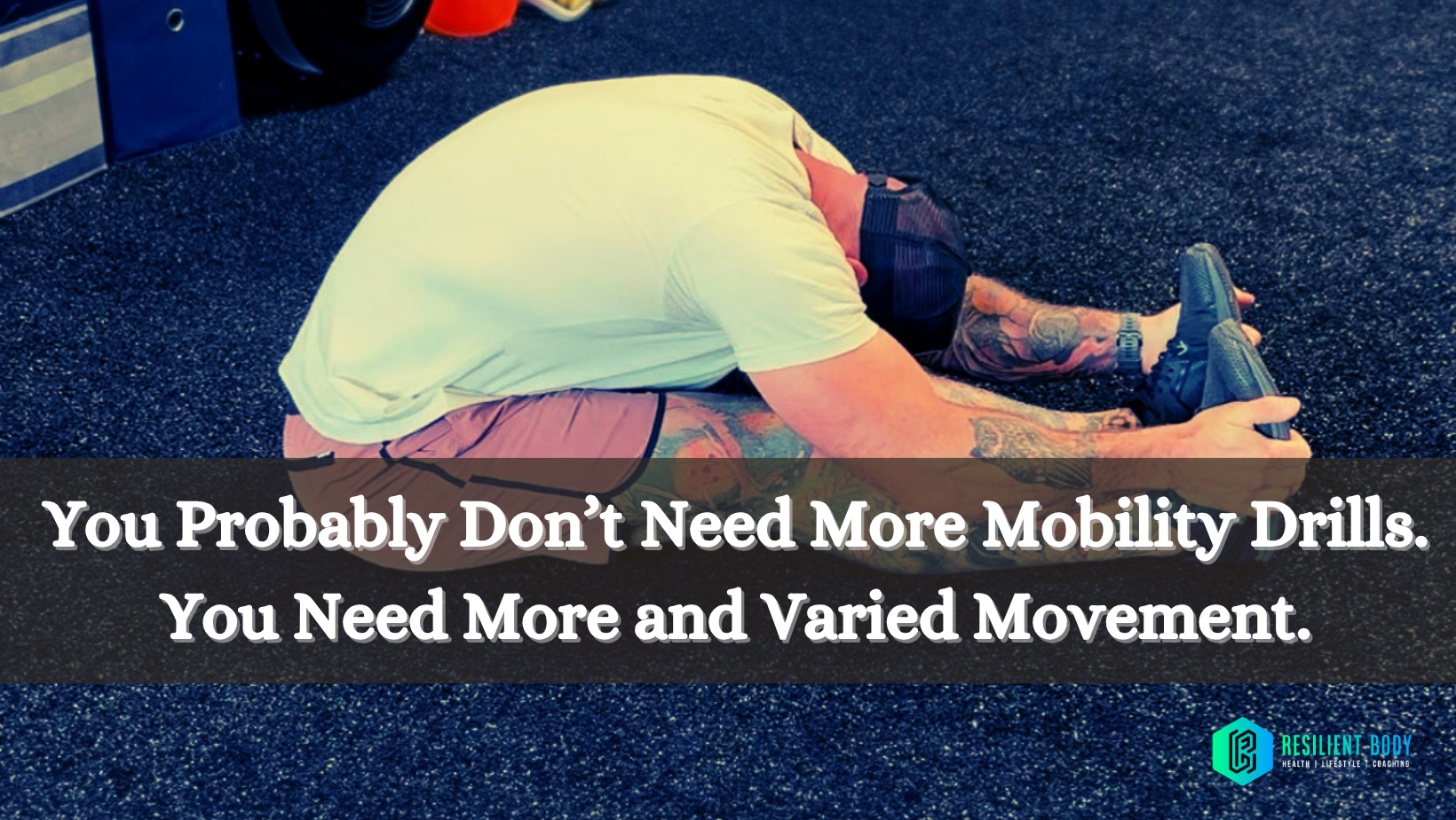
Spend enough time around fitness and you’ll eventually be told that something needs to be “fixed.” Your hips are tight. Your shoulders are rounded. Your posture is bad. Your ankles aren’t mobile enough. The solution is usually another stretch, mobility drill, or corrective exercise.
Sometimes those things are useful, and there are certainly times when improving a specific range of motion matters. But feeling stiff doesn’t necessarily mean you have a mobility problem, and having more range of motion isn’t always the thing you need. Often, what your body needs most is simply more movement, more often, and in more varied ways (ideally with some progressive overload baked in).
Feeling Stiff Doesn't Always Mean You Are Stiff
I spend a fair amount of time at a computer running Resilient Body. By the afternoon, especially after sitting for a couple of hours, I’ll often stand up and feel stiff through my hips and back. My usual solution isn't an elaborate mobility routine. I go for a walk.
After 10-15 or 20 minutes, I usually feel dramatically better. Nothing was necessarily “fixed” during that walk. I didn't permanently lengthen a muscle or put my body back into some ideal alignment. I changed positions, moved my joints, increased circulation, and gave my body something different to do.
That distinction matters because we tend to interpret the sensation of stiffness as evidence that something is physically shortened, restricted, or wrong. Stiffness is a sensation influenced by much more than the actual available range of a joint, and it can sometimes change remarkably quickly once we start moving. This is one reason we've shared simple movement snacks and mobility flows in the past. They aren't magic corrections. They're accessible ways to give your body some movement when it hasn't had much.
Your Posture Probably Doesn't Need to Be "Fixed"
A client recently asked us how he could fix his posture. It's a reasonable question because we've spent decades being told there is a correct way to sit and stand, and that deviations from it will eventually cause problems.
But posture is more complicated than that. There isn't one position your body needs to maintain throughout the day. Slouching isn't inherently bad, sitting perfectly upright isn't inherently good, and standing at a desk for eight hours isn't necessarily better than sitting at one for eight hours. The problem is often less about the position and more about never leaving it.
We've used the phrase before that your best posture is your next posture, and that's still a pretty useful way to think about it. Sit, stand, slouch for a while, go for a walk, reach overhead, get on the floor. Instead of spending the day trying to hold yourself in the “right” position, give your body opportunities to experience lots of them.
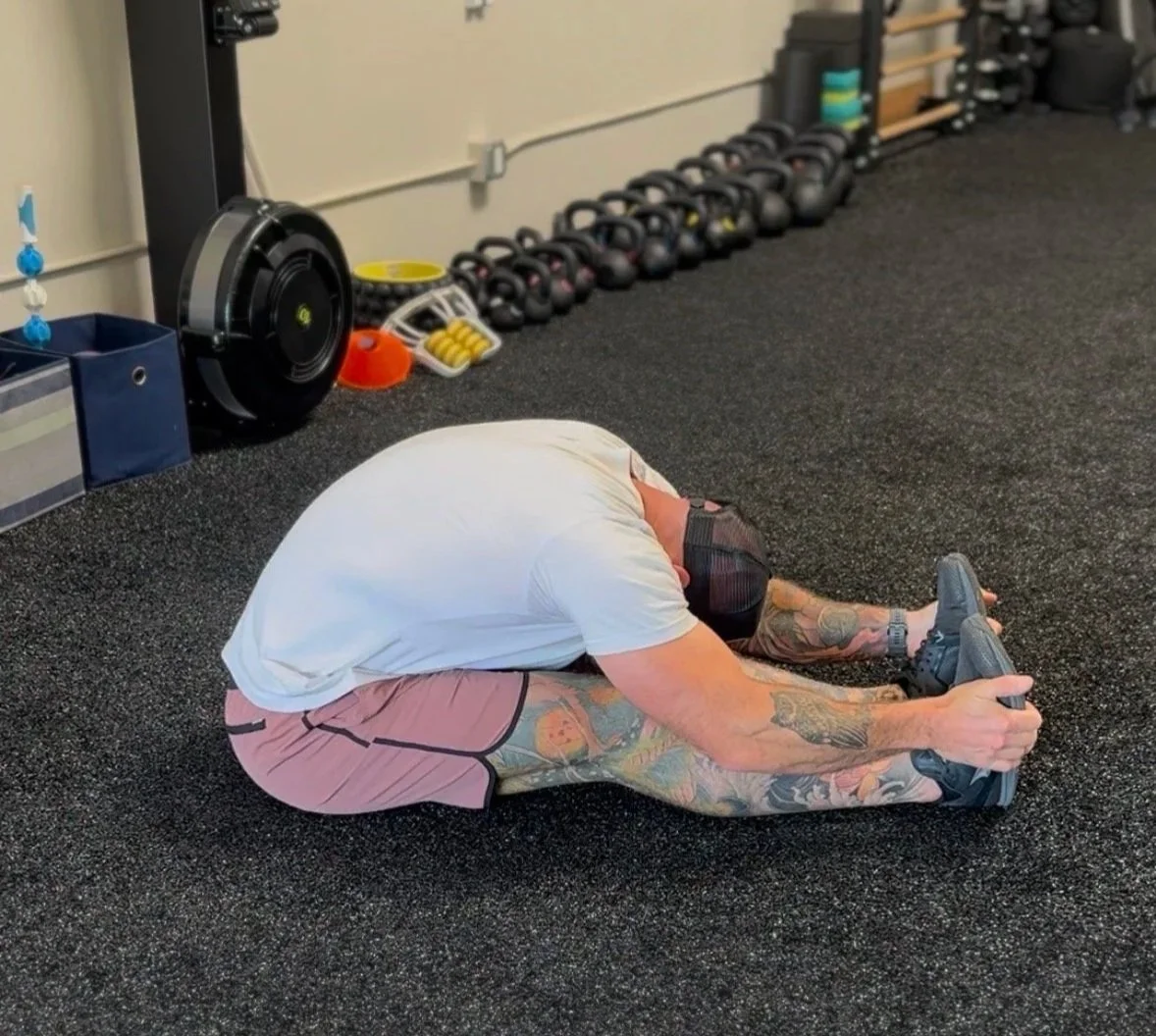
Mobility Isn't Just How Far You Can Stretch
Mobility is useful, but we should be clear about what we're actually trying to accomplish with it. Being able to passively move a joint farther doesn't necessarily mean you can comfortably control that position, produce force there, or use it during something you actually care about.
That's why our approach to mobility often looks different from simply adding more stretching. We have plenty of dedicated resources, including our hip mobility flow and spine mobility sequence, that can be useful when you want to explore more range or simply get moving. But once we find useful range, we generally want to use it and develop some control and strength there.
That's also where well designed strength training becomes part of the mobility conversation. Strength and mobility don't have to live in separate boxes when the exercises themselves are intentionally asking us to explore and control different positions.
Sometimes the Exercise Is the Mobility Work
If you've trained at Resilient Body for a while, you've probably noticed that we sometimes make exercises deliberately harder in ways that force you to use less weight. We might elevate your front foot during a split squat so you have to travel through more hip and knee range, use a heel-elevated squat to encourage a deeper and more upright position, slow an exercise down, add a pause, or choose a unilateral variation where you can't rely as much on momentum or compensation.
The number on the dumbbell or bar may go down, but that doesn't necessarily make the exercise easier. The position itself is part of the challenge. Sometimes limiting the amount of external load you can use allows us to expose you to a more demanding position and gradually build strength and confidence there.
This philosophy extends into our warmups too. They're not just a collection of corrective exercises to get through before the “real” workout starts. Squats, reaches, rotations, crawling patterns, carries and other movements can expose the body to useful positions and ranges while preparing us for what we're about to train. Over time, we're not simply trying to access more positions. We're trying to become comfortable, coordinated and strong in them.
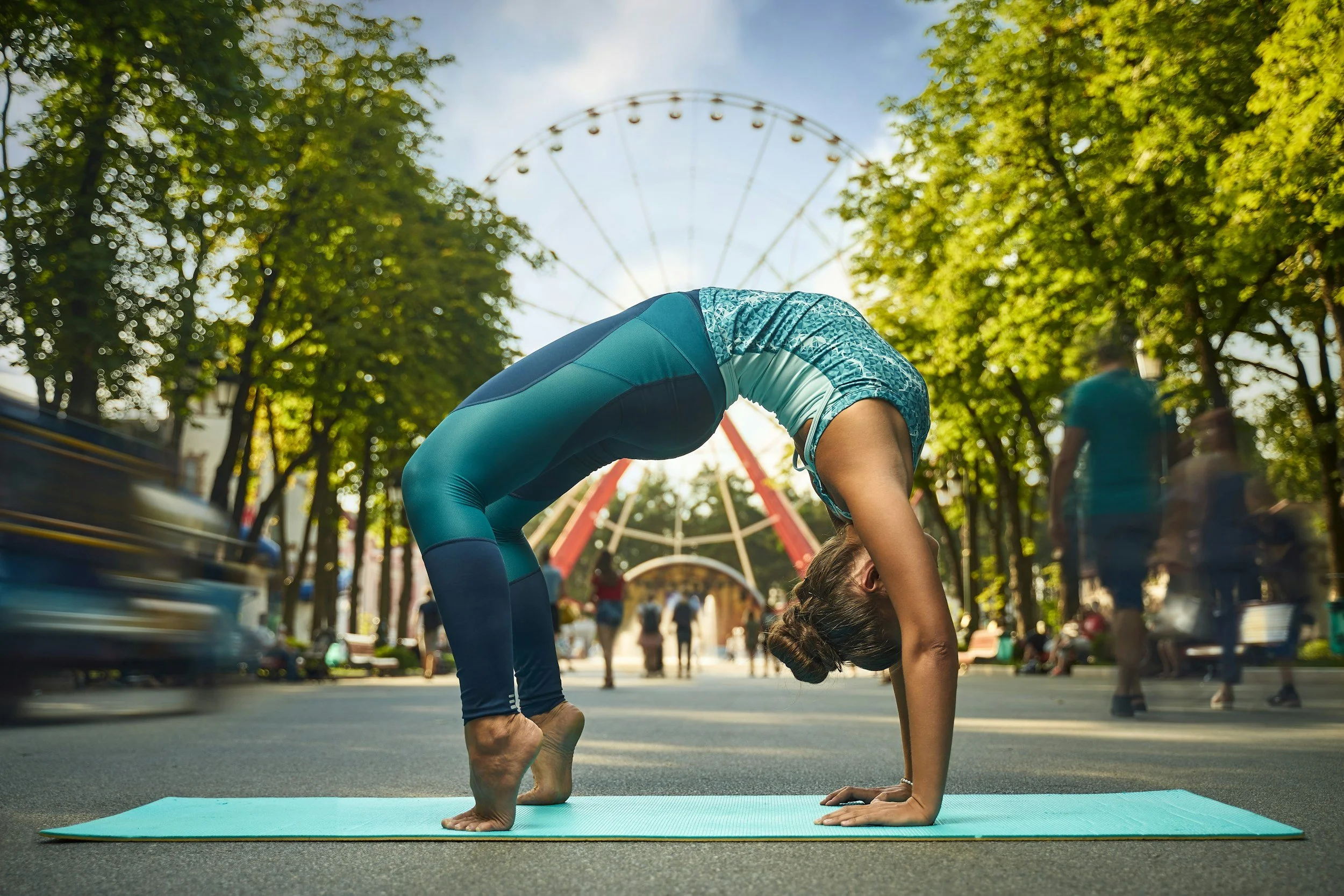
More Mobility Isn't Automatically Better
A runner, golfer, powerlifter and gymnast don't need identical ranges of motion. Neither does someone who simply wants to feel good, stay strong and be able to play with their kids. Your mobility needs should reflect your body and the things you want it to do.
If a restriction is preventing you from doing something you care about, that's worth addressing. But chasing arbitrary mobility standards because you've been told your hips, shoulders or ankles are “tight” can quickly become another fitness problem that didn't need solving.
We'd rather build enough mobility to give you options, enough strength to control those options, and enough variety in your movement that your body isn't spending its entire life in the same few positions. In many cases, that doesn't require another elaborate mobility routine. It requires using your body in more ways.
Before You Try to “Fix” Your Stiffness, Try Simply Moving
Take a walk. Get down on the floor. Squat, reach and rotate. Change positions throughout your workday. Train through different ranges of motion. If you spend most of your day sitting, you probably don't need the perfect five-minute corrective routine nearly as much as you need more opportunities to move throughout the day.
And when there is a range of motion that matters to something you want to do, mobility work can absolutely help you get there. Just don't stop once you've stretched your way into it. Learn to control it, use it, and eventually get strong there.
Evan Is Officially Here
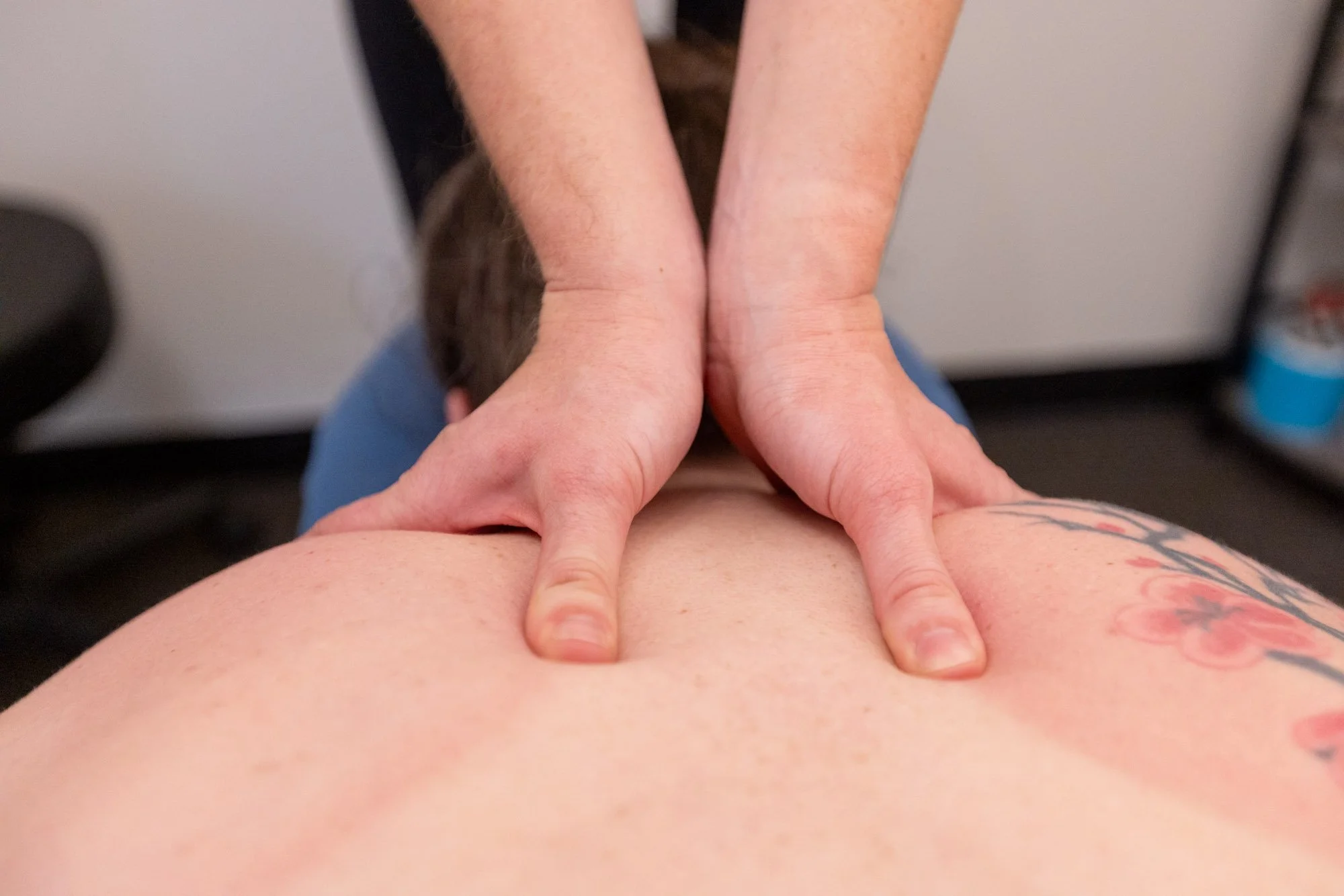
If you didn't get a chance to meet Evan during his complimentary demo sessions, Evan Bachelder is now officially seeing clients at Resilient Body. Evan completed an 800-hour massage therapy program covering both Eastern and Western modalities, and his approach combines deep tissue work, trigger point release, myofascial release, cupping, IASTM, heat and ice therapy, hot stones, and other techniques depending on what makes sense for the person in front of him.
His work can complement training and recovery, but you certainly don't need to wait until something hurts to book. Whether you've been training hard, have an area that's been feeling restricted, or simply want some dedicated recovery time, Evan is now available for massage and manual therapy sessions at Resilient Body every Tuesday, Thursday, Saturday and Sunday.
📣 Quick Announcements:
September Challenge: POWER. We're shifting gears after last month's strength testing with our Power Triple Challenge, where we'll look at different physical challenges related to power output: 3 Events done in a single session will be the MAX Wattage Bike Erg, MAX Distance Broad Jump, MAX Push Press. Outputs will be weight adjusted.
NEW SATURDAY CLASS TIMES & FORMAT STARTS 9/12/26: Starting this Saturday, we're also adding Open Gym alongside the Daily Workout during Functional Pump. You'll still have the programmed workout available, but you'll now have the option to use that time to work independently on your own training. Functional Pump + Open Gym is 9-10a, Stretch + Restore is 10-11a.
Massage & Manual Therapy with Evan: Evan is officially taking appointments. BOOK HERE
Bring a Friend Saturdays: Bring a friend and you're both free for either Saturday morning class. If they sign up, receive $100 off your next package.
New Personal Training Slots Available: Book a consultation if you're ready for more individualized coaching. – Book a consult if you’re ready to level up
💬 Got questions? Reply here or ask your coach next time you're in