

Resilience Is Capacity: A Few Old Tools, Some New Eyes, and October’s Hold & Haul Challenge
This past weekend, our entire coaching team spent some time sharpening our skills around something we deal with every single day at Resilient Body: helping people who don’t always fit neatly into the “just go work out” box.
A lot of our clients find us after they’ve already tried quite a bit, including physical therapy, chiropractic care, massage, rest, stretching, different gyms and different exercises. Maybe they felt better for a while, maybe they didn’t, or maybe they were eventually handed some version of “this is just how your body is now.” After enough setbacks, that can get exhausting, and it becomes pretty easy to start believing your body is fragile.
Resilient Body was built around pretty much the opposite belief. Your body is far more resilient than you probably give it credit for. It is constantly adapting to what you ask of it, trying to protect you, and responding to the inputs you give it. Sometimes you simply need to figure out which capacities have fallen behind and give your system the right opportunity to build them back up.
That was probably my biggest reminder from this weekend. Some of those missing capacities can also be easier to find than we make them if we have the right tools and know what we are looking for.
Sometimes the Best New Tool Is an Old One
One of the funny things about coaching for a long time is that you accumulate a lot of tools. Some stay in your regular rotation, while others slowly get pushed into the back of the toolbox as you learn something newer, more interesting or more sophisticated.
Then every once in a while you open that drawer and realize that one of those old tools was actually pretty damn useful. A couple of those came back to the front for me this weekend, and breathing was one of the big ones.
Breathing is one of the most basic systems we have, and it interacts with pressure management, movement, stress and our ability to tolerate increasing effort. Carbon dioxide and changes in blood pH are also important signals involved in regulating ventilation. Chemoreceptors in and around the brainstem detect those changes and help adjust our breathing response as demand increases.
That makes breathing mechanics, respiratory comfort, stress and someone’s tolerance for rising effort useful pieces of information when we are looking at their overall capacity. For me, that means bringing some simple breathing assessments and interventions back into the rotation when they can help us better understand what is going on.
A trusty old tool can collect a little rust after sitting in the box for a while, but sometimes all it needs is a polish before you remember why you kept it in the first place.
Our Assessments Are Getting a Facelift Too
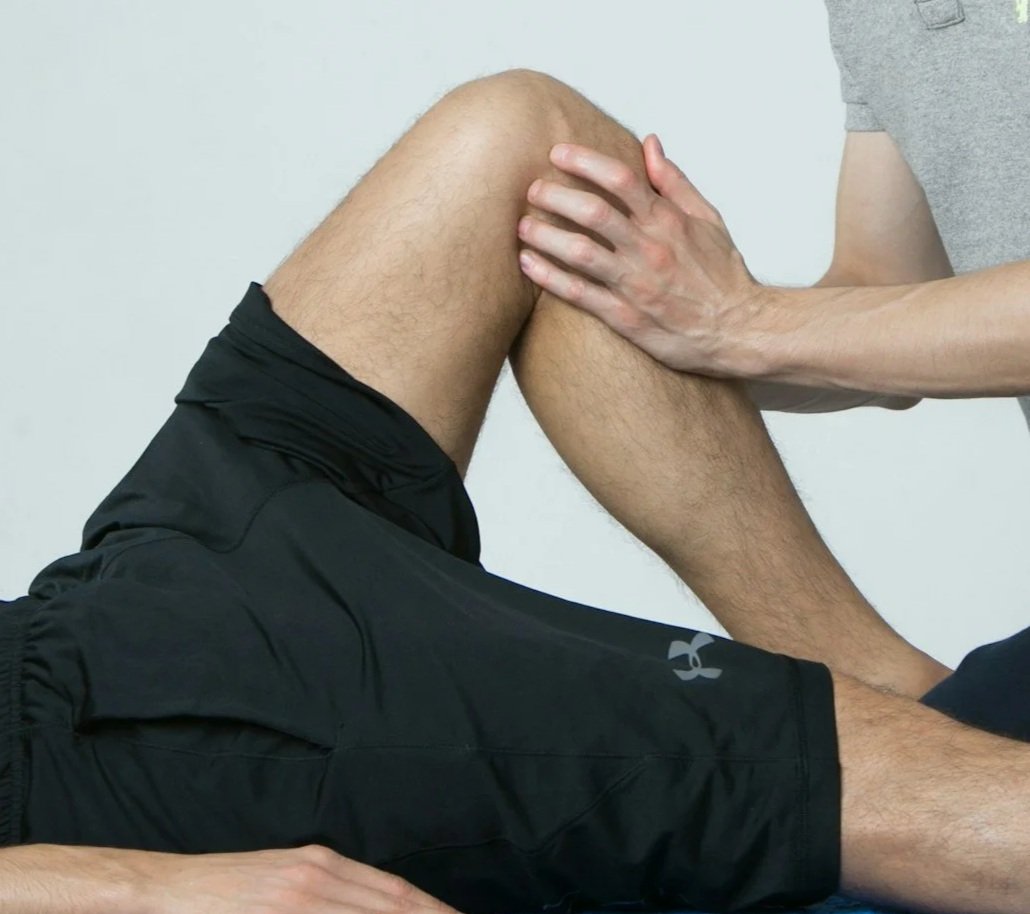
Another big takeaway connects with something we have already been thinking about internally: how can we make our assessment process even better? We want it to become more efficient, more useful and better at getting us to the information that actually changes what we do with someone.
The goal is to become faster and better at identifying what somebody can currently tolerate, where their capacity may be limited, and what actually matters for the things they want to do. We want to collect useful information as efficiently as possible and turn it into a clearer game plan.
Someone might have plenty of mobility but very little strength in a particular position. Someone else may be strong but struggle to sustain effort, while another person might move beautifully until speed, fatigue, load or stress gets introduced. All three can walk in saying, “My hip bothers me,” while needing very different things from us.
Our intake and assessment process will be getting a bit of a facelift as a result. We’ll be tightening up how we look at movement, strength, breathing, conditioning and other basic measures of functional capacity, then getting better at categorizing what we see and translating that information into an actual plan.
That should help us whether someone is coming in for personal training, group training, assisted stretch or another service at Resilient Body. The better we are at finding the capacities that actually matter, the better chance we have of putting our time and their effort in the right places.
Which Brings Us to This Month’s Challenge
October’s challenge happens to be one big experiment in capacity, specifically muscular endurance through the shoulders, grip and trunk wrapped into a fun little gauntlet. Last month we tested strength and power with the Power Triple, so this month we’re going in a very different direction with the Hold & Haul Gauntlet.
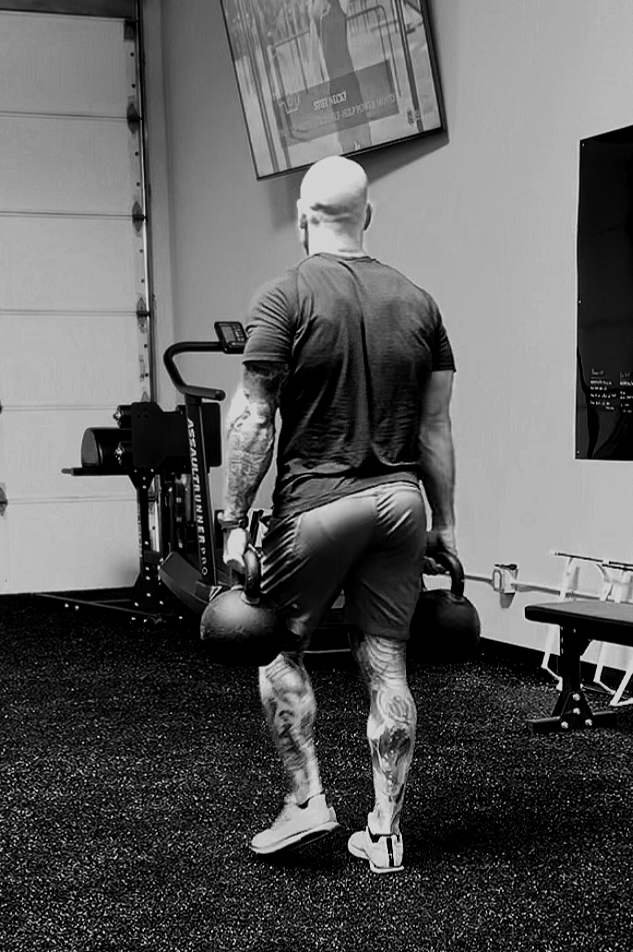
You’ll have four minutes to work through the entire challenge. You’ll start with a 200-meter run, immediately move into a 20-meter sled push, then go directly into a front plate hold to failure before finishing with a farmer carry for as much distance as you can cover before the clock hits zero.
For the plate hold, our standard leaderboard weights will be 45 pounds for men and 25 pounds for women. Farmer carries will use 53 pounds per hand for men and 35 pounds per hand for women, and transitions between each part of the challenge stay on the clock.
Your final score combines the plate hold and farmer carry distance. Each second of the plate hold is worth two points, which gets added to the total distance covered on the farmer carry.
There is a little strategy involved because every part affects what comes next. A faster run and sled buys you more time, a strong plate hold earns you points while also eating into the time available for the carry, and once you finally pick up those farmers, you get whatever distance you can squeeze out before the four minutes are gone.
There will probably be a little regret involved somewhere in there too, but that is part of the fun.
[CHALLENGE VIDEO HERE: Run → Sled → Plate Hold → Farmer Carry]
📣 Quick Announcements:
🎃October Challenge is here! The Hold & Haul Gauntlet will be held in both class and PT sessions. It’s super quick (5minutes), so if you want to give it a whirl, you can also do it during open gym or at sessions end as long as a coach is here to watch 😎
Assisted Stretch sessions with Julie are underway! Many of you may not realize that Julie has been an assisted stretch practitioner for quite some time and knows exactly what to look for. These individualized sessions give you dedicated time to work on range of motion, explore positions that may be harder to access on your own, and simply spend some focused time addressing areas that feel stiff or restricted. You can book Julie here.
Massage & Manual Therapy with Evan on Saturdays and Sundays: Evan is now available Tuesdays, Thursdays, Saturdays and Sundays. If you need a little TLC from life or training, you can book Evan here.
September Challenge Winners: Our September Power challenge winners are Mike Yang and Liz Bauer. You guys brought it! Please come grab your RB hat to rep the win 🧢
🐕 Resilient Body's cutest dog is official: Congratulations to Sierra (pooch) and Patti Will! Your pup cup is on the way…
Best Halloween Costumes next?….
New Personal Training Slots Available: Book a consultation if you're ready for more individualized coaching. – Book a consult if you’re ready to level up
💬 Got questions? Reply here or ask your coach next time you're in