

Something Hurts. Do You Actually Need to Stop Training?
This week, myself and all of our coaches are really excited about a training program we’re attending together this weekend to give us even more tools for working with people who are dealing with pain, previous injuries, physical limitations, or simply trying to get back to doing something they haven’t felt comfortable doing in a while.
This is an area we already spend a lot of time working in, but it’s also one we’re constantly trying to get better at. Because whether you’re coming out of physical therapy, have an old injury that still talks to you occasionally, or you’re just an everyday Joe Schmoe who woke up Tuesday morning and suddenly your shoulder feels weird, knowing how to navigate those situations is a pretty important part of being a good coach.
It’s also a big part of why we’re called Resilient Body in the first place.
Our Bodies Are Pretty Damn Resilient
The idea behind Resilient Body was born partly out of our own frustrating setbacks over the years, and partly from working with a whole lot of people who had started to lose hope in what their bodies could do.
Some had been hurt. Some had surgery. Some had been told to avoid certain movements indefinitely. Others had simply accumulated enough aches, pains, false starts and bad experiences that their world gradually became smaller.
But we’ve also seen, over and over again, just how adaptable people can be. Bodies heal and adapt. Capacity can be rebuil and movements that feel impossible today don't necessarily stay impossible forever.
That doesn't mean every injury is insignificant, that pain should be ignored, or that you should grit your teeth and push through whatever your body throws at you. Resilience isn't pretending nothing is wrong. It means figuring out what you can do today and continuing to build from there.
When Something Hurts, We Don't Immediately Throw Training Away
One of the most common mistakes people make when something starts hurting is thinking in absolutes.
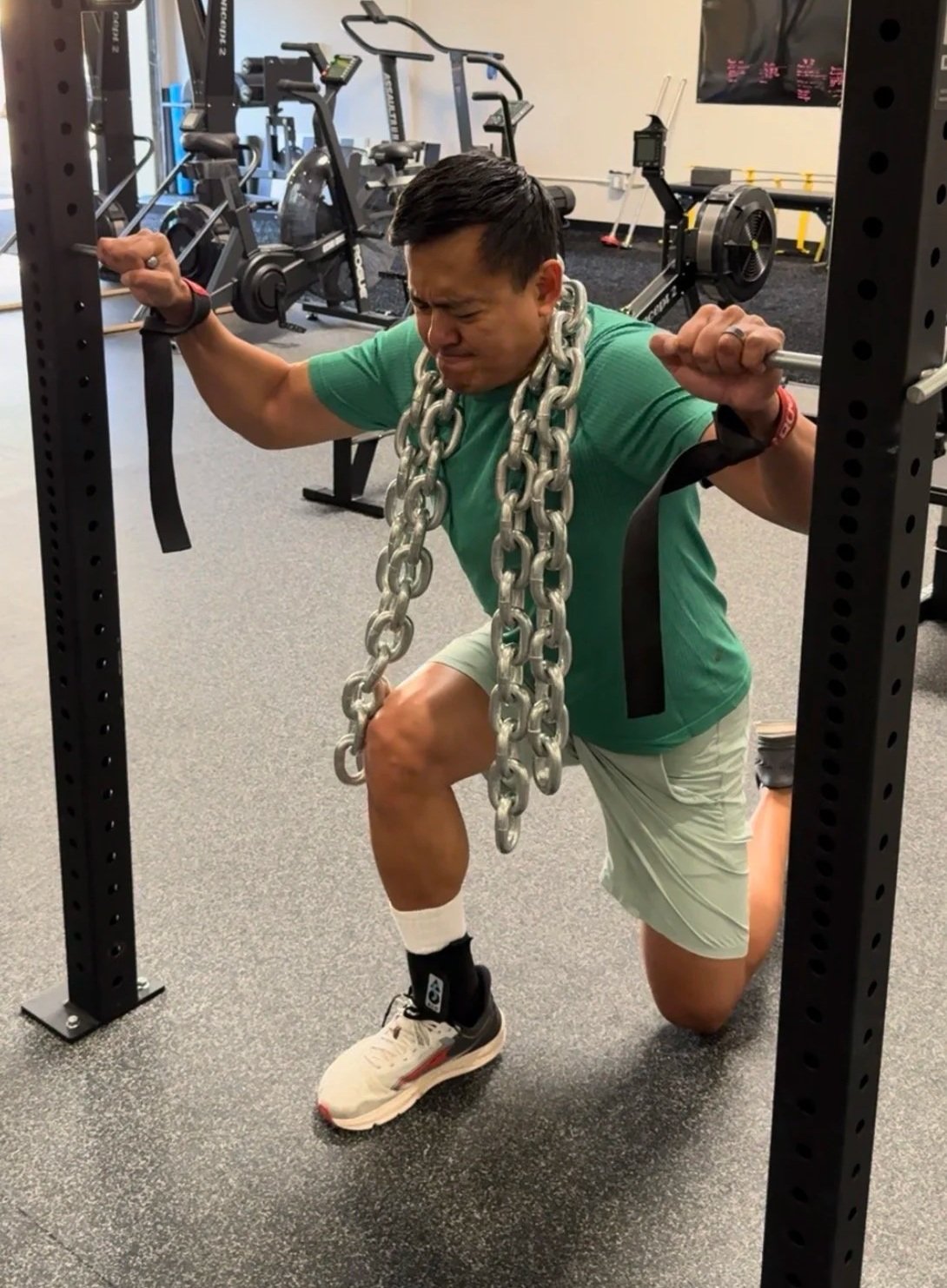
Either they ignore it and keep hammering away at exactly what they were doing, or they become afraid of it and stop moving altogether. Usually, there are a whole lot of options in between. Can we change the range of motion? Can we change the load? Can we slow the movement down? Does a slightly different position feel better? Can we choose another exercise that trains the same general quality without irritating whatever is currently angry? OR, can we keep training the rest of your body while giving one area a little less work?
And sometimes, yes, the answer is that something doesn't look or feel right and we'd rather have you get it evaluated before we keep messing with it. Good coaching isn't about forcing every person through the program exactly as it was written. It's about understanding the goal of the program well enough to know how to change the route without losing sight of where we're trying to go.
Pain Is Information, But It's Complicated Information
If you train at Resilient Body, you've probably heard us ask you to give us a number when something doesn't feel right and that number sometimes corresponds to a specific sensation.
Generally, we're pretty comfortable keeping a discomfort or pain sensation in that 0–3 out of 10 range when the circumstances make sense. If something stays mild, doesn't continue escalating as you move, and settles appropriately afterward, we may be perfectly comfortable modifying what you're doing and continuing to train.
That number isn't a magical cutoff, though. Pain is influenced by a lot more than simply how much physical damage exists in a particular body part. Previous experiences, stress, sleep, expectations, fear, fatigue, context and plenty of other factors can influence what we feel and how threatening that sensation seems.
That doesn't make pain imaginary, it makes pain human. It also means we have to pay attention to the bigger picture. What originally happened? What does it feel like TODAY? Is it getting better or worse over time? How does it respond while you're moving? What happens later that day or the following morning? Is your overall function improving over time? That bird's-eye view matters much more to us than obsessing over whether every individual training session was perfectly pain-free.
Progress Isn't Perfectly Linear
This might be one of the hardest things to accept when you're trying to come back from an injury or deal with something that's been bothering you. You can have three great weeks and then an incredibly crappy Tuesday. Now, that crappy Tuesday doesn't necessarily mean you're back at square one. Rebuilding capacity rarely happens in a perfectly straight line. There are fluctuations along the way, which is why we're much more interested in the trend over weeks and months than we are in panicking over every little bump in the road.
Part of our job is helping you understand the difference between a bump in the road and something that deserves more attention. There are absolutely situations where we want you evaluated by an appropriate healthcare professional. A significant traumatic injury, major or rapidly worsening loss of function, progressive neurological symptoms, or something else that simply doesn't fit the normal pattern of a minor training irritation isn't something we're going to coach our way through just to prove how tough you are.
The takeaway is that not every sensation is a catastrophe either and learning how to distinguish that can be incredibly freeing.
The Words We Use Matter Too
Something we've become increasingly conscious of over the years is the language we use when talking to people about their bodies.
There is a pretty big difference between telling someone their back is "bad" and telling them that their back is currently sensitive to a particular movement or amount of work. One sounds permanent, while the other gives us somewhere to go. If you've spent years hearing that you're fragile, broken, crooked, unstable, worn out, or that some body part is basically a ticking time bomb, it's not surprising that you might become apprehensive about using it. We see this ALL the time and it’s frustrating.
We don't want to give people false reassurance, and we're never going to pretend we know something we don't. But we also don't want to unnecessarily teach someone to fear their own body. Sometimes one of the most important things we can give somebody is a little hope. Not blind optimism or always an "everything is fine" response. Evidence, experience and small wins that gradually show you that maybe you're capable of more than you thought.
We Don't Just Bridge the Gap Between Rehab and Performance
We've talked before about the gap that can exist between finishing rehab and actually feeling capable again. That's certainly part of what we do, but Resilient Body isn't a rehab facility, and working around pain isn't the entirety of what we do.
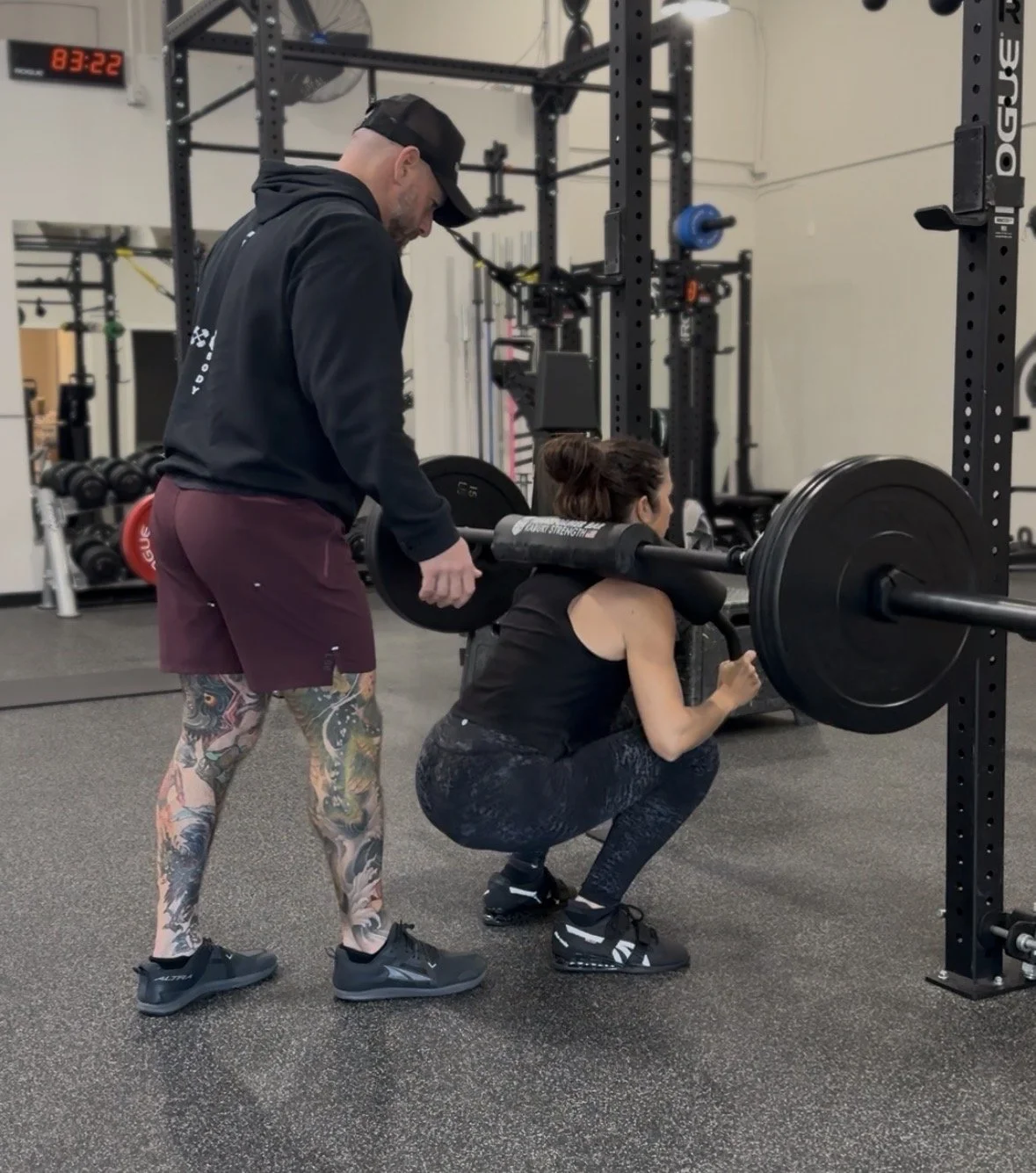
We train a lot of people; and people are different. Some people come here wanting to get stronger, others want more muscle, or want to improve their conditioning or athleticism, while some want to keep doing the sports and hobbies they love. Some just want to feel better and be harder to phase when life throws a wrench.
Nevertheless, sometimes those same people tweak their knee, their back gets cranky, or an old shoulder issue resurfaces. Because life is a roller coaster, and unfortunately none of us gets to remain in a perfectly optimized, pain-free training montage forever we are prepared for those cases too.
That's why we think being able to navigate these periods is part of training, not necessarily an interruption from it. The goal isn't to create a life where nothing ever hurts. We can't promise you that, and anyone who does probably shouldn't.
The goal is to build a body, and an understanding of that body, that gives you more options when life inevitably throws something at you.
We're Still Getting Better at This Too
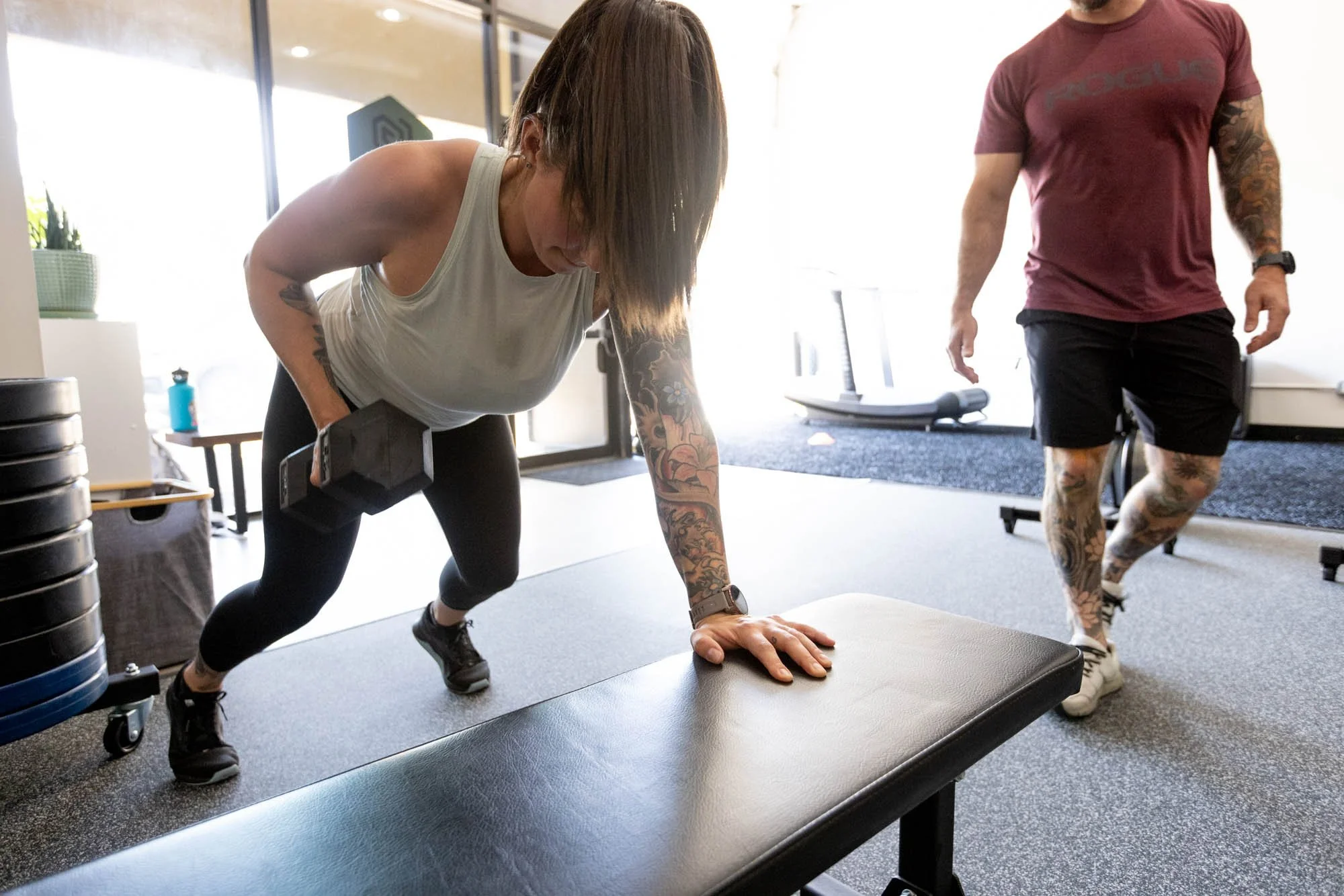
That's why our entire coaching staff is spending time together this weekend continuing our education in this area.
We'll be diving deeper into assessing what someone can currently tolerate, making appropriate modifications, progressively rebuilding capacity, and helping people return to the things that matter to them while staying firmly within our role as coaches.
We're excited about it because it isn't replacing what we already do. It's adding more tools, better frameworks and another layer of understanding to something that's been central to Resilient Body from the beginning.
And I'm sure we'll come back with some new ideas, some things that challenge how we've thought about certain situations, and plenty that we're excited to start using with our current members and the people who haven't found us yet.
We'll share more about this all soon. Because setbacks are going to happen. Bodies are going to occasionally hurt. Life is going to get messy.
BUT, Fortunately… you're probably a whole lot more resilient than you think!
📣 Quick Announcements:
Assisted Stretch sessions with Julie are underway! Many of you may not realize that Julie has been an assisted stretch practitioner for quite some time and knows exactly what to look for. These individualized sessions give you dedicated time to work on range of motion, explore positions that may be harder to access on your own, and simply spend some focused time addressing areas that feel stiff or restricted. You can book Julie here.
Massage & Manual Therapy with Evan on Saturdays and Sundays: Evan is now available Tuesdays, Thursdays, Saturdays and Sundays. If you need a little TLC from life or training, you can book Evan here.
September Challenge: Our Power Challenge wraps up this week, so make sure you get your final efforts in and recorded. We've had a lot of fun watching everyone attack this one, and we'll share the final results once everything is in.
🐕 Meanwhile, the competition that may actually matter most is still underway: voting for Resilient Body's cutest dog. If you haven't voted yet, check out the board in the gym and make your choice. We make no promises that friendships will survive the final results.
🎃 And finally, a new October Challenge is coming. We'll announce the details shortly, so enjoy the last few days of September before we find something new to make you all compete over.
Bring a Friend Saturdays: Bring a friend and you're both free for either Saturday morning class. If they sign up, receive $100 off your next package.
New Personal Training Slots Available: Book a consultation if you're ready for more individualized coaching. – Book a consult if you’re ready to level up
💬 Got questions? Reply here or ask your coach next time you're in